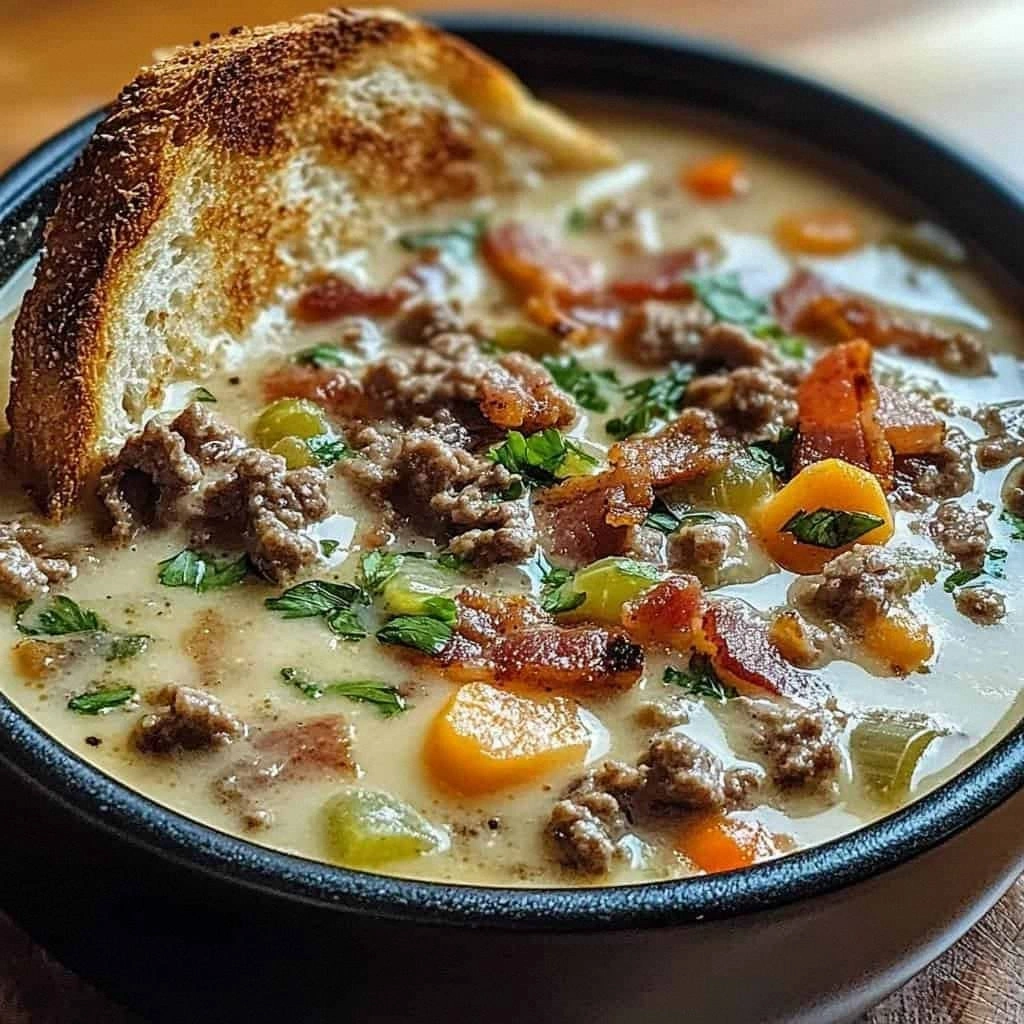
I still remember the night I accidentally invented Philly Cheesesteak Soup. It was one of those brutal January evenings when the wind whips between the rowhouses like it’s got a personal vendetta against anyone with exposed skin. I’d promised my buddies I’d make cheesesteaks for the Eagles playoff game, but somewhere between the third beer and the fourth quarter, I got cocky and tried to speed-thaw the steak in hot water. Rookie move. The meat turned gray and sad, the rolls were stale, and the cheese looked like it had given up on life. In a moment of desperation—or maybe genius—I chopped everything up, threw it in a pot, and figured I’d call it “deconstructed” like those fancy restaurants do. The smell that wafted up thirty minutes later had grown men abandoning a tied game to hover around my stove, bowls in hand like soup-starved orphans. That first spoonful was a revelation: all the messy, beefy, cheesy glory of South Philly’s finest export, but sippable and sophisticated enough that you could serve it at a dinner party without getting side-eye from your foodie friends.
Picture this: tender ribbons of sirloin swimming in a velvety broth that tastes like someone distilled a thousand steak sandwiches into liquid gold. The onions have melted into sweet silk, the peppers still have a little snap, and the cheese—oh, the cheese—creates these stretchy strands that cling to your spoon like they’re trying to pull you in for a hug. That first bite hits you with the familiar umami punch of beef and onions, then the creaminess blooms across your tongue, and finally there’s this whisper of heat from the red pepper flakes that makes you reach for another spoonful before you’ve even swallowed the first. I dare you to taste this and not go back for seconds. I’ll be honest — I ate half the batch before anyone else got to try it, standing over the pot in my Eagles jersey, using the ladle like a giant straw while my friends yelled at the TV in the other room.
Most recipes get this completely wrong. They treat it like a bland vegetable soup with some steak tossed in, or they go overboard and turn it into cheese fondue with beef croutons. Here’s what actually works: you build layers of flavor the same way you build a proper cheesesteak, but you let the broth do the heavy lifting. The steak stays tender because we sear it fast and hot, then let it finish poaching gently in the soup. The cheese melts into the broth instead of congealing on top, creating this luscious body that coats every noodle and vegetable. And the bread? We turn it into crispy crostini that you can float on top like edible life rafts, because dipping is half the fun of a real cheesesteak experience.
Okay, ready for the game-changer? We’re using cream cheese as our secret weapon. It melts smoother than a politician’s promise and gives the soup that signature Philly richness without making it feel like you’re drinking melted provolone. Stay with me here — this is worth it. Let me walk you through every single step — by the end, you’ll wonder how you ever made it any other way.
What Makes This Version Stand Out
Steakhouse Depth: We’re not just boiling beef here. By searing the steak first and using the fond to build our broth, we’re extracting every molecule of flavor. The result tastes like it simmered for hours, not minutes.
Cheese Strategy: Most recipes dump all the cheese in at once and pray. We layer it — cream cheese for body, provolone for that authentic Philly bite, mozzarella for stretch. Each plays a specific role, like a dairy-based boy band.
Texture Harmony: The soup has body without being heavy, creaminess without globs of melted cheese. The vegetables keep some bite, the steak stays tender, and the crostini provide crunch. It’s a full sensory experience, not just hot cheese water.
Weeknight Friendly: From fridge to table in 45 minutes, and most of that is hands-off simmering. You can start this after work and still eat before the game starts. Try that with a real cheesesteak when you’ve had a few.
Crowd Psychology: I’ve served this to Philly natives who swore they’d hate it, cheese snobs who called it “elevated,” and picky kids who asked for seconds. It hits that magical sweet spot where everyone feels like it was made just for them.
Make-Ahead Magic: The flavors actually improve overnight, and it reheats like a dream. Make a double batch on Sunday, and you’ve got lunch that’ll make your coworkers weep with envy.
Ingredient Flexibility: Ribeye too pricey? Sirloin works. Don’t like green peppers? Use all red. Lactose issues? There’s a workaround. This recipe bends but never breaks.
Comfort Factor: This isn’t just soup — it’s a warm blanket in bowl form. On a scale of one to hug from your grandmother, it’s off the charts. Picture yourself pulling this out of the oven, the whole kitchen smelling incredible, and tell me you don’t feel better already.
Alright, let's break down exactly what goes into this masterpiece...
Inside the Ingredient List
The Flavor Base
The olive oil isn’t just for cooking — it’s your first layer of flavor. Use a decent extra virgin, something that actually tastes like olives, not the generic stuff that’s been sitting on the shelf since the Bush administration. When it shimmers in the pot, that’s your cue that the pan’s ready for the aromatics. Skip this step and your onions will steam instead of caramelize, and you’ll lose that deep sweetness that makes this soup taste like it’s been simmering all day. I learned this the hard way when I tried to rush with cold oil and ended up with soup that tasted like sadness and boiled onions.
Speaking of onions, don’t you dare use one of those pre-chopped containers from the store. Fresh onions release sugars as they cook, creating this gorgeous golden fond on the bottom of your pot. That’s pure flavor gold, and you can’t get it from the pre-cut stuff that’s been oxidizing in plastic for who knows how long. Chop them medium — not minced, not chunky — so they melt into the broth but still give you something to bite. One large onion looks like a mountain when you first add it, but it cooks down to almost nothing, concentrating its sweetness into every spoonful.
The Texture Crew
Green and red bell peppers aren’t just for color, though they do make the soup look like Christmas in a bowl. The green brings a slightly bitter, grassy note that cuts through all the richness, while the red adds sweetness and body. Together they create this complex pepper flavor that tastes like you spent hours roasting them, not the fifteen minutes it actually takes. Chop them the same size as your onions so they cook evenly and you get a perfect bite every time. If you’ve ever struggled with soggy peppers in soup, you’re not alone — and I’ve got the fix. We add them later in the process so they keep some snap.
The sirloin steak is where most people mess up. They buy the pre-cut “stir-fry” beef that’s been sitting in preservative juice, or they try to use ground beef and wonder why it tastes like cafeteria food. You want a nice sirloin, partially frozen so you can slice it against the grain into whisper-thin ribbons. These cook in seconds and stay tender because they’re not fighting you with every chew. Pound for pound, sirloin gives you the best beefy flavor without requiring a second mortgage like ribeye would. Plus, those little bits that break off during cooking? They become beef confetti that seasons the whole pot.
The Unexpected Star
Worcestershire sauce is your umami bomb. Just one teaspoon deepens the beef flavor like you’ve been simmering bones for hours. It’s made from fermented anchovies, vinegar, and molasses — basically liquid sophistication. Don’t skip it, and for the love of all that’s holy, don’t substitute soy sauce. They’re both brown and salty, but that’s where the similarity ends. The thyme and red pepper flakes are background singers — you shouldn’t be able to pick them out individually, but you’d miss them if they weren’t there.
The beef broth is your canvas. Use low-sodium so you can control the salt level, because nothing ruins a good soup like taking a sip and feeling like you’ve been punched by a salt lick. If you’ve got homemade broth, you’re living right and I’m jealous. Otherwise, look for brands that list beef bones as the first ingredient, not “beef flavor.” The diced tomatoes might seem weird in a cheesesteak soup, but they add acidity and body that keeps all that dairy from feeling like you’re drinking cheese sauce. Trust the process.
The Final Flourish
Now we’re getting to the good stuff. Butter and flour create our roux — the thickening agent that turns thin broth into silky soup. Cook it until it smells like toasted nuts and looks like beach sand. This next part? Pure magic. The milk warms up the roux gradually so you don’t get lumps, and the cream cheese melts into this gorgeous velvety base. Your soup will go from looking like a separated mess to looking like it cost fifteen dollars at a fancy bistro. Softened cream cheese is crucial — cold cream cheese turns into little rubbery pellets that refuse to melt. Learn from my failures.
The cheese blend is where personality happens. Provolone gives you that authentic Philly bite, mozzarella gives you those Instagram-worthy cheese pulls, and together they melt into the soup without turning into a rubbery mass. Add them off the heat so they melt gently instead of seizing up into little cheese curds. The garlic powder is our final background note — fresh garlic would be too sharp here, but powder gives you that mellow garlicky warmth that makes people ask “what’s in this?” in the best way possible.
Everything’s prepped? Good. Let's get into the real action...
The Method — Step by Step
- Heat your olive oil in a heavy-bottomed pot over medium-high heat until it shimmers like a mirage. You want it hot enough that a piece of onion sizzles on contact, but not so hot that it smokes and turns bitter. Add your chopped onions and spread them into an even layer. Now — and this is crucial — don’t touch them for at least three minutes. Let them develop that golden-brown fond on the bottom. Stir too early and they’ll steam instead of caramelize. Your kitchen should start smelling like the best diner in Philadelphia. That sizzle when it hits the pan? Absolute perfection.
- When the edges of the onions turn translucent and start to brown, toss in your peppers. The green peppers go in first because they’re sturdier and need a head start. Stir everything around, scraping up those beautiful brown bits from the bottom. This is where your flavor lives. Cook for about five minutes until the peppers soften but still have some bite. They should look glossy and bright, not sad and overcooked. Season with a pinch of salt now — it helps draw out moisture and concentrates the flavors.
- Push all the vegetables to the sides of the pot and crank the heat to high. Add your thinly sliced steak in a single layer — work in batches if you need to. You want each piece to sear, not steam. Let it sit for 90 seconds without moving it. This is the moment of truth. Flip the steak strips and cook for another 60 seconds. They’ll cook more in the soup, so you’re just looking for color here. Remove the steak to a plate — we’re building flavor in layers, not boiling beef into shoe leather.
- Pour in about half a cup of your beef broth and scrape like your life depends on it. All those brown bits should dissolve into the liquid, creating this gorgeous mahogany base. Add the rest of the broth, the diced tomatoes with their juice, Worcestershire sauce, thyme, and red pepper flakes if you’re using them. Bring it to a boil, then reduce to a simmer. Let it bubble gently for ten minutes so the flavors can get acquainted. Your house should smell like you’ve been cooking all day, even though it’s been twenty minutes.
- While the soup simmers, make your roux in a separate pan. Melt the butter over medium heat until it foams, then whisk in the flour. Keep whisking for about two minutes — you’re cooking out the raw flour taste and developing nutty flavor. It should smell like toasted bread and look like wet sand. This is your thickening power. Slowly whisk in the milk, a little at a time, until you have a smooth, thick sauce. Take it off the heat and whisk in the softened cream cheese until it’s completely melted and silky.
- Now comes the fun part. Ladle a cup of hot broth into your cream sauce and whisk until smooth. This tempers the mixture so it won’t curdle when you add it to the soup. Pour the whole thing back into the pot and watch the magic happen. The soup will thicken slightly and turn this gorgeous creamy color. Add your cooked steak back in and let everything simmer together for five minutes. The steak will finish cooking and the flavors will marry. Don’t walk away from the stove here — milk can scorch if the heat’s too high.
- Remove the pot from heat and stir in your provolone and mozzarella a handful at a time. Let each addition melt completely before adding the next. The soup should become glossy and thick enough to coat the back of a spoon. If it gets too thick, thin it with a splash of milk. Taste and season with salt, pepper, and garlic powder. This is where you make it yours — some like it peppery, some like it mild. I like mine with enough black pepper that it makes me sneeze.
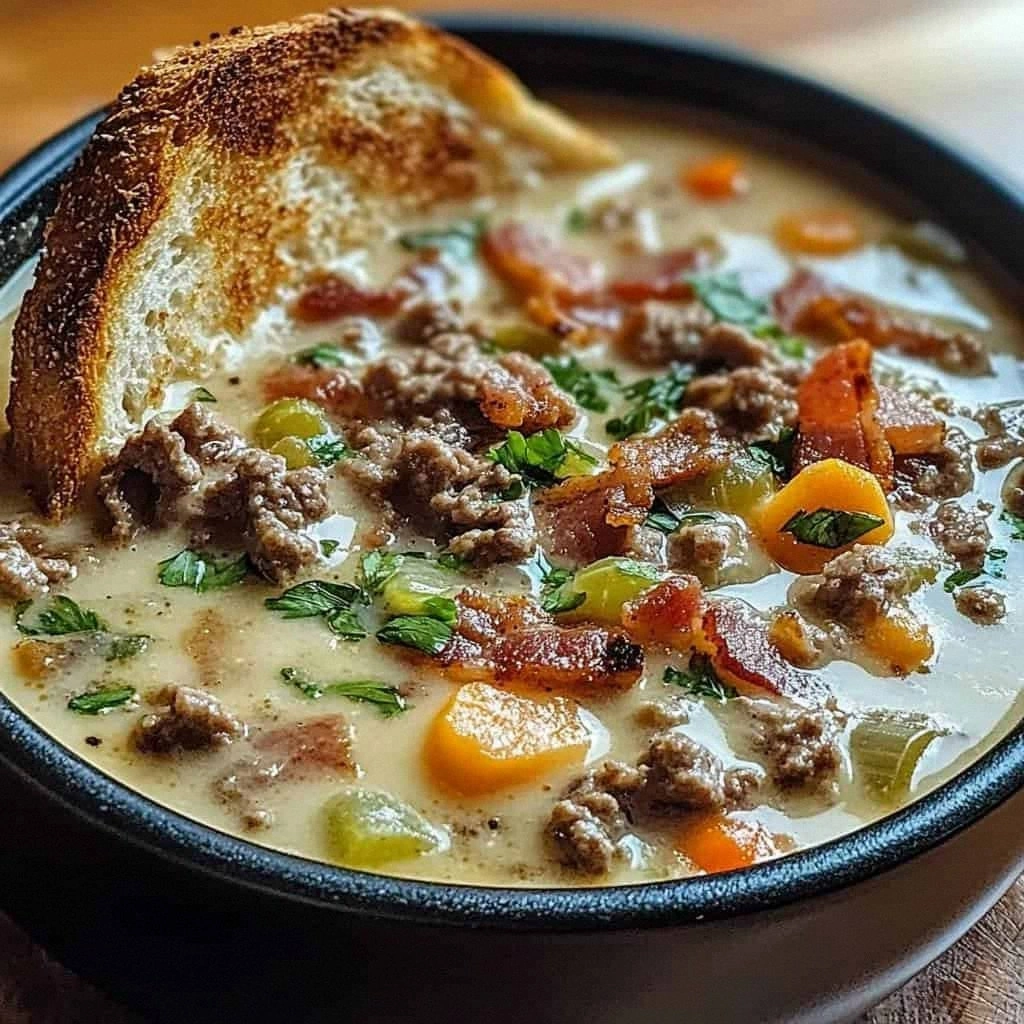
- Let the soup rest for five minutes off the heat. I know you’re tempted to dive in immediately, but this rest lets the cheese fully incorporate and the flavors settle. While you wait, toast some crusty bread for dipping. Ladle into bowls and garnish with chopped parsley and extra cheese if you’re feeling fancy. The soup should be thick enough that your spoon stands up for a second, but still silky and drinkable. Serve it piping hot with the toasted bread on the side for the full experience.
That’s it — you did it. But hold on, I’ve got a few more tricks that’ll take this to another level...
Insider Tricks for Flawless Results
The Temperature Rule Nobody Follows
Here’s the thing about dairy-based soups: temperature is everything. Add cold cheese to hot soup and you’ll get a stringy, separated mess that looks like someone already ate it once. Your cream cheese needs to be room temperature soft, and your shredded cheese should be pulled from the fridge twenty minutes before you need it. The soup itself should be hot enough to melt cheese but not boiling — anything over 180°F and your dairy proteins seize up like they’re offended. I keep a instant-read thermometer handy and pull the pot off heat when it hits 170°F. A friend tried skipping this step once — let’s just say it didn’t end well. Her soup looked like cottage cheese floating in brown water, and she had to serve it with a disclaimer.
Why Your Nose Knows Best
Your sense of smell is your best kitchen timer with this soup. When the onions are properly caramelized, they’ll smell sweet and slightly nutty, not sharp and sulfurous. The roux should smell like toasted bread, not like flour. When you add the Worcestershire, you should get this wave of savory complexity, not just salt. If something smells off or weak, it probably needs more time or heat. I’ve developed this weird habit of sniffing the air every thirty seconds when I’m cooking, like some kind of culinary bloodhound. My roommate thinks I’ve lost it, but my soup game is undefeated.
The 5-Minute Rest That Changes Everything
I know you’re hungry. I know the soup smells incredible. But walk away for five minutes after you add the final cheese. This isn’t just chef nonsense — those minutes let the cheese fully emulsify into the broth, creating that glossy, restaurant-quality texture. The steak fibers relax and absorb some broth, going from chewy to spoon-tender. The vegetables settle into their final texture, and the whole soup reaches this perfect temperature where it’s hot enough to warm your soul but not so hot it burns your tongue. Set a timer, pour yourself a glass of wine, and practice the ancient art of patience. Your future self will thank you.
The Garnish Game
Never underestimate the power of a proper garnish. A sprinkle of fresh parsley doesn’t just add color — it adds a bright, herbal note that cuts through all that richness. Extra shredded cheese on top gives people the cheese pull photos they crave. But here’s the pro move: keep a jar of pickled jalapeños on the table. The acid and heat wake up your palate between bites, making each spoonful taste as amazing as the first. Some people like hot sauce, but I find the vinegar in pickled peppers plays better with the dairy. Plus, watching people’s faces when they try the combination is half the fun.
Creative Twists and Variations
This recipe is a playground. Here are some of my favorite ways to switch things up:
The Mushroom Lover’s Dream
Add eight ounces of sliced mushrooms when you cook the onions. Cremini or baby bella work best — they’ve got that earthy depth that complements the beef. Cook them until they release their liquid and turn golden. The mushrooms absorb all the beefy flavors and add this meaty texture that makes the soup feel even more substantial. Mushroom haters won’t even notice them because they take on the flavor of the broth, but mushroom lovers will taste that umami bomb and know you’re a kitchen wizard.
The Heat Seeker’s Version
Replace the red pepper flakes with a diced jalapeño sautéed with the vegetables. Add a dash of hot sauce to each bowl, or stir in a spoonful of harissa for North African heat. The cool creaminess of the soup means you can go pretty aggressive with spice before it becomes overwhelming. I like to serve it with a bottle of Crystal hot sauce on the side so people can customize their heat level. The dairy cools the immediate burn but lets the complex pepper flavors shine through.
The Low-Carb Bowl
Skip the bread and load it up with extra vegetables. Add cauliflower florets or zucchini noodles during the last five minutes of cooking. Use heavy cream instead of milk for fewer carbs and richer texture. You can even thicken it with xanthan gum instead of roux if you’re really committed. The result is just as satisfying but won’t kick you out of ketosis. My keto friends go crazy for this version, especially when I top it with pork rinds for crunch instead of croutons.
The Deluxe Edition
Use ribeye instead of sirloin for the ultimate indulgence. Add a splash of sherry when you deglaze the pot. Stir in some sautéed lobster or crab meat during the last minute for surf-and-turf vibes. Top each bowl with a drizzle of truffle oil and some fresh chives. This is special occasion soup — the kind you make for your father-in-law when you want to remind him his daughter married well. It’s over the top in the best possible way.
The Vegetarian Compromise
Okay, it’s not really a cheesesteak without steak, but hear me out. Use vegetable broth and replace the steak with sliced portobello mushrooms that you’ve marinated in soy sauce and Worcestershire. Add some smoked paprika for that missing beefy depth. Use plant-based cheese shreds and coconut cream instead of dairy. Is it the same? No. Is it delicious in its own right? Absolutely. I’ve served this to vegetarians who declared it “life-changing,” which I’ll take as a win.
The Breakfast Remix
Add some diced potatoes to make it heartier, then crack a few eggs right into the simmering soup during the last five minutes. The eggs poach in the broth and the yolks break to create this rich, luxurious texture. Serve it with everything bagel seasoning on top instead of parsley. It’s like breakfast sandwiches and soup had a beautiful baby. Perfect for those mornings after when you need something substantial to absorb last night’s poor decisions.
Storing and Bringing It Back to Life
Fridge Storage
This soup keeps like a champ in the refrigerator for up to four days, but you need to store it smart. Let it cool completely before transferring to airtight containers — hot soup in sealed containers creates condensation that waters down your perfect texture. I like to use wide-mouth mason jars because they’re easy to fill and you can see the gorgeous layers. Press plastic wrap directly onto the surface before sealing to prevent that weird skin from forming. When you reheat it, add a splash of milk or broth because the soup will thicken as it chills. Warm it gently over medium-low heat, stirring frequently. Never let it boil or the dairy will break and you’ll have grainy soup sadness.
Freezer Friendly
Here’s where things get tricky. The cheese and milk don’t love the freezer, but it’s doable if you’re desperate. Freeze in portion-sized containers so you’re not thawing more than you need. Thaw overnight in the fridge, then reheat very gently with additional milk to bring back the creamy texture. The texture won’t be quite as silky as fresh, but the flavor is still incredible. I freeze it without the final cheese addition, then stir in fresh cheese after reheating. This method gives you 90% of the fresh experience, which is better than no cheesesteak soup at all during a snowstorm.
Best Reheating Method
The microwave is your enemy here — it heats unevenly and can turn your beautiful soup into a curdled mess. Use the stovetop and practice patience. Add a tiny splash of water before reheating — it steams back to perfection. Warm it over medium-low heat, stirring every minute or so, until it’s just hot enough to steam. If it looks separated, whisk in a spoonful of cream cheese and it’ll come right back together. For the full experience, toast fresh bread while the soup reheats. Leftover soup is actually better than fresh in some ways — the flavors have had time to meld and deepen into something even more incredible.