I still remember the first time I made cheeseburger casserole. It was a Tuesday night, my fridge looked like a crime scene—half a pound of ground beef, some questionable cheddar, and a wilting onion. My kids were circling like hungry vultures, homework papers were flying, and I had exactly forty-five minutes before total household mutiny. In desperation I threw everything into a baking dish, muttered a small prayer to the culinary gods, and hoped for the best. What emerged from that oven twenty-five minutes later was nothing short of miraculous: bubbling, golden, beefy, and so ridiculously comforting that even my pickiest eater asked for thirds. Fast forward three years and that frantic experiment has evolved into the recipe I’m about to share—the one friends text me about at midnight, the one that shows up at every potluck, the one my neighbor claims convinced her to buy a second casserole dish just so she could make it twice in one weekend.
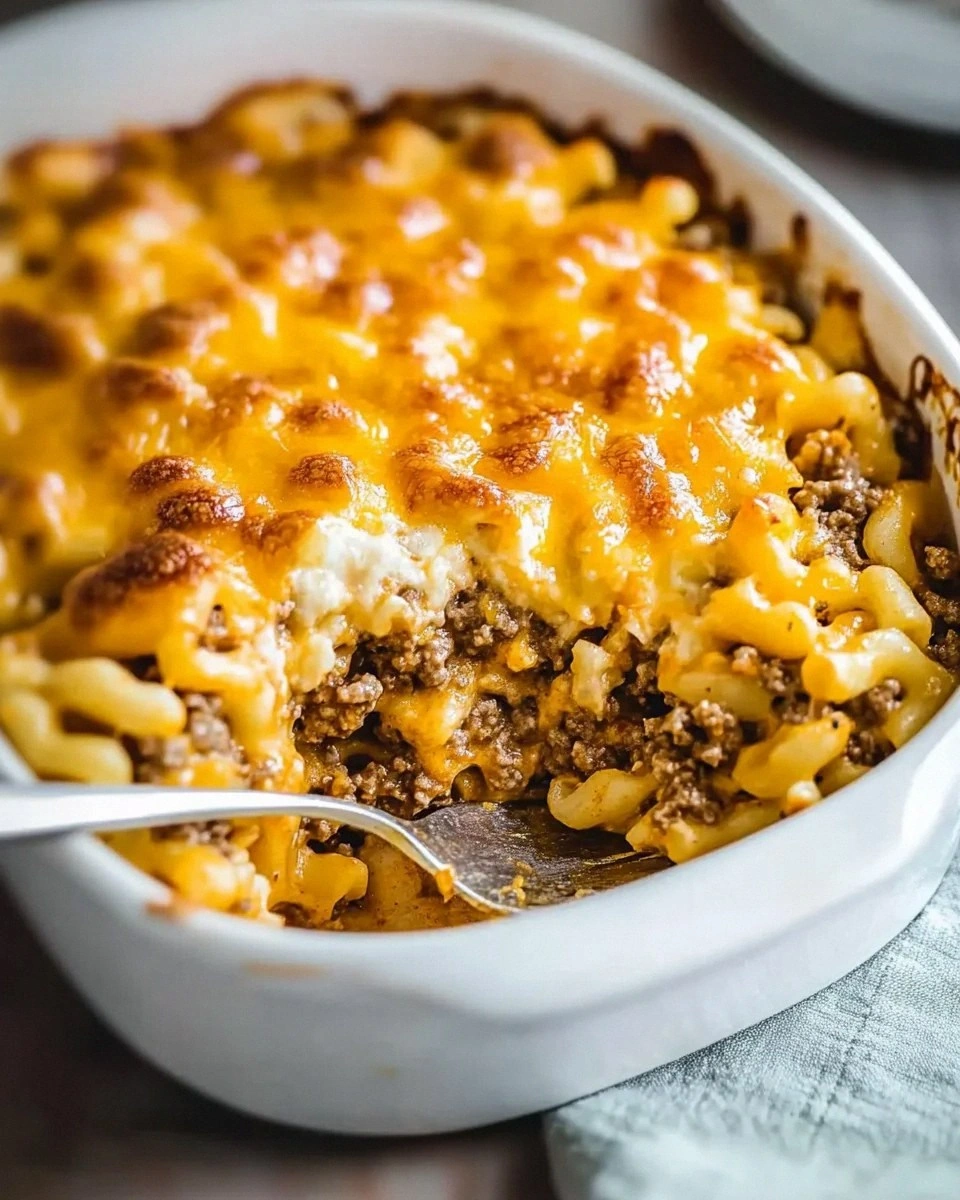
Picture this: you’re standing at the counter, the ground beef is sizzling with onions and garlic, and the smell is wrapping around you like that hoodie you refuse to throw away. You stir in ketchup, mustard, a splash of Worcestershire, and suddenly your kitchen smells like the best diner you’ve ever visited. While that magic is happening, you whisk together a quick batter—yes, batter, trust me—that turns into a fluffy, almost dumpling-like layer under a river of melted cheese. Everything bakes together until the edges are crispy, the center is molten, and the top is freckled with those irresistible dark-brown spots that signal maximum flavor. That first bite? It’s the cheeseburger you dream about at 2 a.m. after a long week, except it’s spoonable, shareable, and somehow even more addictive.
Most recipes you’ll find online take the lazy route: boil some pasta, stir in Velveeta, call it a day. That’s not comfort food; that’s a cry for help. This version layers real flavor—caramelized beef, two kinds of cheese, a secret hit of smoked paprika—so every forkful tastes like the diner cheeseburger you remember, not the cafeteria casserole you dreaded. I dare you to taste this and not go back for seconds. I’ll be honest—every single time I make it, I eat half the batch before anyone else gets to try it, standing at the stove “testing for seasoning” until my shirt is splattered like a Jackson Pollock painting. If you’ve ever struggled with dry, bland, or just-plain-sad casseroles, you’re not alone—and I’ve got the fix.
Okay, ready for the game-changer? We’re going to treat the casserole like a two-act play: the bottom layer is a savory, juicy beef mixture that stays moist even after baking, and the top is a cheesy, airy lid that puffs like a soufflé and browns like the best grilled-cheese crust. Stay with me here—this is worth it. By the time you pull that bubbling beauty from the oven, the whole kitchen will smell incredible, your people will be hovering with spoons in hand, and you’ll finally understand why casserole dishes were invented in the first place. Let me walk you through every single step—by the end, you’ll wonder how you ever made it any other way.
What Makes This Version Stand Out
- Beefy Bliss: We sear the meat hard so it develops those crave-worthy crispy edges, then deglaze the pan to capture every last bit of caramelized flavor. Most recipes boil their beef into gray sadness—don’t be most recipes.
- Cheese Stratagem: A 50/50 split of sharp cheddar for tang and young mozzarella for stretch means you get both flavor and that Instagram-worthy cheese pull. One cheese is never enough; this is a casserole, not a compromise.
- Secret Flavor Bomb: A teaspoon of Worcestershire and a whisper of smoked paprika give the beef the same depth you’d expect from a backyard grill. Your guests will ask if you snuck in bacon grease—let them think you’re a wizard.
- One-Bowl Wonder: The topping batter comes together in sixty seconds with pantry staples. No stand mixer, no folding, no drama—just a quick whisk and you’re done. Future-you doing dishes will thank present-you.
- Texture Play: The bottom stays saucy while the top bakes into a fluffy, almost popover-like layer. You get spoon-coating gravy and cloud-soft bread in every bite. It’s like a cheeseburger and a dumpling had a beautiful baby.
- Make-Ahead Hero: Assemble it the night before, park it in the fridge, then bake straight from cold—just add ten extra minutes. Potluck hosts, busy parents, and lazy Sunday chefs unite.
Alright, let’s break down exactly what goes into this masterpiece...
Inside the Ingredient List
The Flavor Base
Ground beef is the star, but not all beef is created equal. Go for 80/20—enough fat to stay juicy but not so much that you’re swimming in grease. If you can find locally raised chuck that’s coarsely ground, grab it; the bigger grind means craggier edges that crisp like mini burger patties. Yellow onion brings sweetness once it turns translucent, and a single fat clove of garlic, micro-planed so it almost dissolves, perfumes the whole dish without any harsh bites. Skip the garlic powder—fresh is non-negotiable here. Want to push it even further? Add a tablespoon of tomato paste and let it caramelize on the bottom of the pan until it turns brick-red; that concentrated umami backbone is what separates good from legendary.
The Texture Crew
All-purpose flour teams up with baking powder to give the topping lift, while a single egg plus whole milk create a tender custard that sets around the beef like a cozy quilt. Melted butter adds richness; don’t swap in oil—butter’s milk solids brown as the casserole bakes, lending a nutty aroma that echoes a butter-grilled bun. A pinch of sugar balances the sharp cheddar and acidic ketchup, and don’t even think about skipping the salt—unsalted beef and cheese need the help to sing. If you’re feeling fancy, swap a quarter cup of the milk for evaporated milk; the extra proteins give the topping a soufflé-like puff that’ll have everyone asking for your secret.
The Unexpected Star
Worcestershire sauce is the umami grenade that makes people say, “I don’t know what you did, but wow.” It’s made with anchovies, tamarind, and molasses—basically liquid depth. Just a teaspoon is enough; any more and you veer into steak-sauce territory. Smoked paprika adds a subtle campfire note, but if you only have regular, that’s fine—just promise me you’ll try the smoked version at least once. Ketchup isn’t just for sweetness; its vinegar brightens all the beefy richness, and the tomato solids melt into the sauce like a covert marinara. Yellow mustard might seem odd baked into a casserole, but it mirrors the tang you’d get on a diner burger, cutting through the cheese so the whole thing doesn’t feel like a dairy bomb.
The Final Flourish
Sharp cheddar brings the zing, while low-moisture mozzarella delivers that Instagram-ready cheese pull. Grate them yourself—pre-shredded cellulose-coated cheese refuses to melt smoothly and will give you a grainy top. A quick dusting of dried oregano on the surface blooms in the oven’s heat and smells like pizza night at your childhood roller rink. Finally, a grind of black pepper right before serving wakes everything up, the same way a crack of pepper on a burger patty makes the whole bite pop. If you want color, scatter a handful of diced pickles on top after baking; the cool crunch against hot cheese is the textural mic drop nobody sees coming.
The Method — Step by Step
- Set a 10-inch oven-safe skillet over medium-high heat and add the ground beef, breaking it into rough 1-inch chunks. Let it sit—don’t stir—for a full three minutes so the bottom develops a deep brown crust. That sizzle when it hits the pan? Absolute perfection. Once the edges caramelize, start crumbling the meat smaller with a wooden spoon, letting the rendered fat coat the surface like a built-in non-stick layer. If you’ve got more than a tablespoon of grease, spoon some off; we want flavor, not an oil slick.
- Toss in the diced onion and cook until it turns translucent and sweet, about four minutes. Add the garlic and stir just until fragrant—thirty seconds tops—because scorched garlic becomes bitter and will haunt your casserole like a culinary ghost. Sprinkle in the smoked paprika, a good pinch of salt, and several grinds of black pepper. The spices should bloom in the fat, turning the beef a rich brick red and making your kitchen smell like a road-trip steakhouse.
- Reduce the heat to medium-low and stir in ketchup, mustard, and Worcestershire. Let the mixture simmer for two minutes so the sugars in the ketchup start to caramelize and the harsh edge of the mustard mellows. The sauce will tighten and coat the beef like glossy barbecue shack goodness. Taste now—yes, now—and adjust salt; remember the cheese on top will add saltiness later, so err on the conservative side. Scrape up any sticky browned bits; they’re flavor gold.
- While the beef mixture stays warm on the lowest flame, whisk together flour, baking powder, sugar, and a pinch of salt in a medium bowl. In a separate jug, whisk milk, egg, and melted butter until homogenous. Pour the wet into the dry and stir just until no streaks remain—lumps are fine, over-mixing makes the topping tough. The batter should feel like thick pancake mix and smell faintly of Sunday morning griddles.
- Heat your oven to 400°F (205°C) and position a rack in the center. While it heats, sprinkle half the cheddar and half the mozzarella evenly over the beef mixture still in the skillet. This cheesy under-layer melts into the sauce, creating a molten core that keeps everything juicy during baking. Resist the urge to stir—it’s supposed to look like a dairy volcanic landscape.
- Pour the batter over the cheese layer, starting at the edges and working toward the center so the sauce doesn’t seep up the sides. Use the back of a spoon to nudge it into an even blanket; it will spread slightly as it bakes. The surface doesn’t have to be perfect—rustic means homemade, and homemade means you get to lick the spoon without judgment.
- Top the batter with the remaining cheeses, letting some shreds tumble onto the cast-iron rim where they’ll fry into frico lace. Dust lightly with dried oregano; the heat will revive the herb and perfume the air like an old-school pizza parlor. Slide the skillet onto a foil-lined baking sheet to catch any molten overflow—future-you cleaning the oven will thank present-you.
- Bake for 22–25 minutes, until the top is puffed, deeply golden, and the cheese is freckled with those crave-worthy brown spots. If you tap the surface with a spoon, it should feel set but springy, like a well-made mattress for mini cheese dreams. Let it rest five minutes; the sauce will thicken just enough to stay on your spoon yet still run invitingly into the fluffy topping. Serve hot straight from the skillet, preferably with a stack of napkins and zero regrets.
That's it—you did it. But hold on, I've got a few more tricks that'll take this to another level...
Insider Tricks for Flawless Results
The Temperature Rule Nobody Follows
Your fridge-cold beef will seize when it hits the hot pan, squeezing out moisture and steaming instead of searing. Let the meat sit on the counter for fifteen minutes while you chop the onion; it’ll brown faster and stay juicier. Same rule applies to the milk and egg in the topping—room-temperature dairy blends more smoothly, giving you a puffier, more evenly risen blanket. A friend tried skipping this step once; let’s just say her casserole had the texture of a rubber bath mat. If you’re in a rush, submerge the egg in warm tap water for five minutes and microwave the milk in ten-second bursts until it feels lukewarm.
Why Your Nose Knows Best
Ignore the clock and trust your senses. When the onions smell sweet enough to eat straight from the pan, they’re ready. When the baked topping smells like buttered toast and the cheese edges turn amber, pull it out—even if the timer still says three minutes. That nutty aroma is the Maillard reaction telling you maximum deliciousness has been achieved. If you wait for a timer alone, you’ll miss the sweet spot and land in over-browned territory where cheese tastes like burnt plastic. Future pacing: picture yourself pulling this out of the oven, the whole kitchen smelling incredible, and you’ll understand why sensory cooking beats digital precision every time.
The 5-Minute Rest That Changes Everything
I know, I know—you’re hungry, the kids are circling, and that molten cheese is calling your name like a siren. But cutting into the casserole straight from the oven is like slicing into a water balloon. Give it five short minutes and the sauce thickens just enough to cling to your spoon, the cheese sets so you get defined layers, and nobody burns the roof of their mouth. Cover loosely with foil so the top doesn’t sweat and lose its crisp. Those five minutes are perfect for setting the table, pouring drinks, or sneaking a pickle slice to tide you over.
Creative Twists and Variations
This recipe is a playground. Here are some of my favorite ways to switch things up:
Bacon Double Cheese Casserole
Fry four strips of bacon until crisp, crumble, and stir half into the beef along with a tablespoon of the rendered fat for smoky depth. Top the finished casserole with the remaining bacon just before serving so it stays crunchy. Add a handful of shredded smoked gouda along with the cheddar for a triple-threat cheese situation. Your house will smell like a state-fair burger stand, and your cardiologist will send you a thank-you card for job security.
Spicy Southwest Fiesta
Swap the smoked paprika for chipotle powder and fold a drained can of diced green chiles into the beef. Use pepper jack instead of mozzarella and finish with a drizzle of chipotle mayo and a shower of fresh cilantro. Serve with cold beer and a side of lime wedges; the tang cuts the richness like a mariachi trumpet slicing through a quiet night.
Mushroom Swiss Deluxe
Sauté eight ounces of sliced cremini mushrooms in butter until they give up their liquid and turn golden, then layer them over the beef before adding the cheese. Swap cheddar for nutty Gruyère and add a splash of soy sauce to the mushrooms for extra umami. The result tastes like the best diner patty melt you ever had, minus the greasy grill.
Breakfast-for-Dinner Mash-Up
Replace half the ground beef with breakfast sausage, stir in a handful of frozen hash-brown shreds, and crack four raw eggs onto the surface during the last eight minutes of baking. The eggs set into jammy, golden centers that turn the casserole into a one-pan brunch dream. Serve with hot sauce and a side of maple syrup for the ultimate sweet-salty crossover.
Low-Carb Cauli-Cheese Version
Skip the flour batter and instead fold four cups of riced cauliflower into the beef mixture along with an extra egg and a half-cup of grated Parmesan. The cauliflower soaks up the sauce and bakes into a tender, almost risotto-like base while still keeping things keto-friendly. It’s surprisingly satisfying, and your carb-counting cousin will finally stop bringing their own sad Tupperware to family dinner.
Kid-Friendly Pizza Burger
Stir two tablespoons of mini pepperoni into the beef, swap the mustard for Italian seasoning, and use mozzarella with a little provolone for that classic pizza-cheese stretch. After baking, top with warm marinara and a flurry of grated Parmesan. My nephew calls it “pizza in a spoon,” which is either a culinary revolution or the best marketing slogan ever invented by a ten-year-old.
Storing and Bringing It Back to Life
Fridge Storage
Let the casserole cool completely, then transfer portions to airtight glass containers; plastic can absorb the cheesy aroma and haunt tomorrow’s strawberries. It keeps up to four days, though good luck having any survive past Tuesday. Press a piece of parchment directly onto the surface before snapping on the lid to prevent the top cheese layer from drying into rubber.
Freezer Friendly
Wrap individual squares in plastic wrap, then foil, and freeze for up to two months. Label with the date so you’re not playing archaeological dig next winter. Thaw overnight in the fridge; the topping can get a bit spongy if you microwave from frozen. For best results, reheat in a 350°F oven for fifteen minutes until the center is piping hot and the edges re-crisp.
Best Reheating Method
Add a tiny splash of water to the container before microwaving—about a teaspoon per portion—then cover loosely and heat at 70% power in 45-second bursts. The steam rehydrates the sauce so it doesn’t turn into beef concrete. If you’re reheating a whole skillet, tent with foil and warm at 325°F for twenty minutes, removing the foil for the last five to bring back that golden crust. Serve with a fresh crack of pepper and maybe a fried egg on top for breakfast leftovers that feel intentional, not desperate.