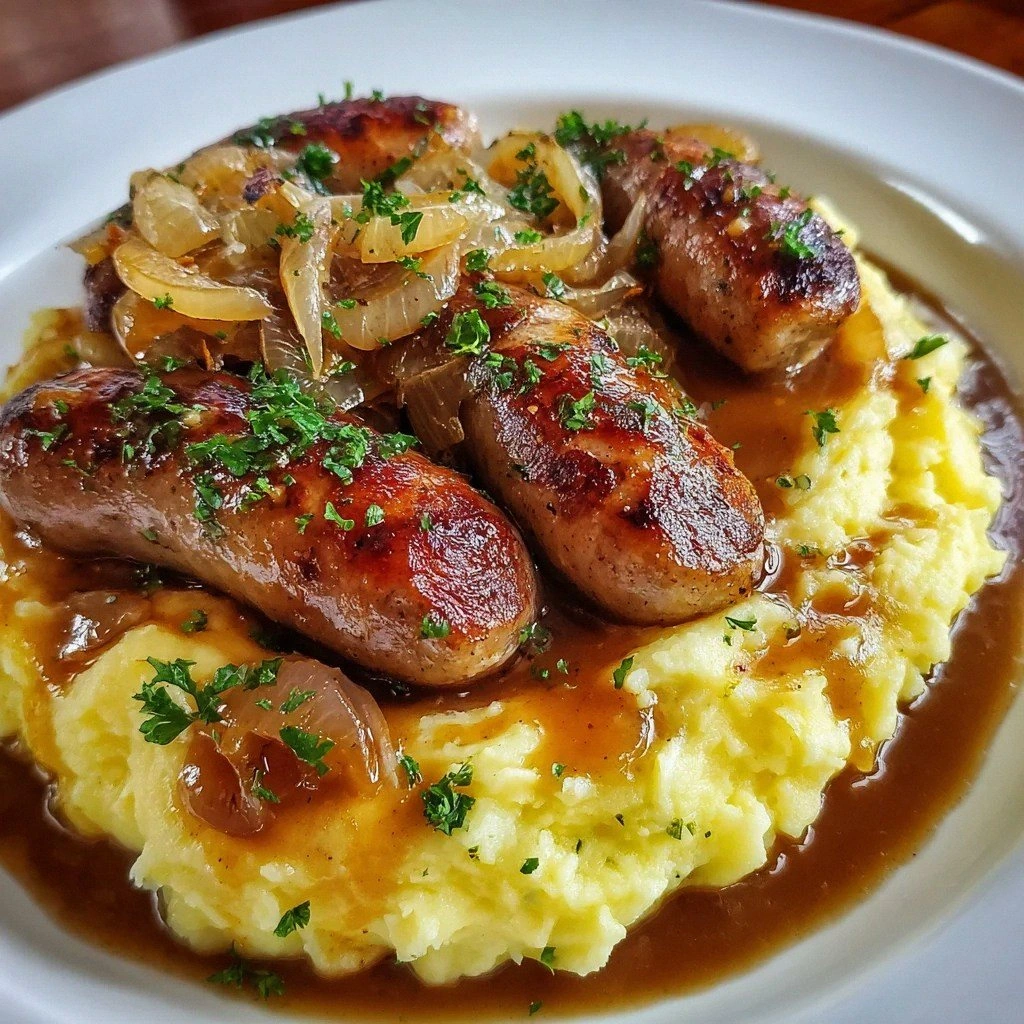
I still remember the first time I made bangers and mash for my skeptical brother-in-law. He'd spent years traipsing through London pubs, sampling every version of this British comfort classic, and he looked at me like I was about to serve him rubbery sausages floating in wallpaper paste. But when those perfectly caramelized onions hit the hot pan and filled my tiny kitchen with their sweet, almost jammy perfume, his eyebrows shot up. By the time I ladled that silky, mahogany gravy over buttery mashed potatoes so smooth they could make a grown man weep, he was practically licking the plate clean. That moment — watching him close his eyes and mutter "blimey" under his breath — is when I knew I had cracked the code to the most soul-satisfying version of this humble dish.
Here's the thing about bangers and mash: most recipes treat it like an afterthought, some sad cafeteria slop thrown together for tourists who don't know better. They'll tell you to boil the potatoes until they're waterlogged and flavorless, to overcook the sausages until they burst, to make a thin, sad excuse for gravy that tastes like brown water. If you've ever struggled with this dish turning out bland, mushy, or just plain disappointing, you're not alone — and I've got the fix. This recipe is the result of months of testing, dozens of potato varieties, three different sausage suppliers, and one very memorable kitchen disaster involving a fire alarm and my roommate's cat.
What you're about to make isn't just dinner — it's a warm hug on a cold night, the kind of meal that makes people linger at the table long after the plates are empty. The sausages develop these gorgeous crispy edges while staying juicy inside, the potatoes whip up into clouds of buttery perfection, and the gravy — oh, that gravy — coats everything in rich, savory bliss. Picture yourself pulling this together, the whole kitchen smelling like a proper British pub, your family hovering nearby because they can't resist the siren call of sizzling sausages. Let me walk you through every single step — by the end, you'll wonder how you ever made it any other way.
What Makes This Version Stand Out
Texture Nirvana: We're talking sausages with skin that snaps like a perfectly ripe grape, revealing meat so juicy it practically weeps, paired with mash so smooth and fluffy it could double as a pillow. Most recipes give you dry, shriveled links and gluey potatoes that sit in your stomach like a brick.
Gravy Game-Changer: Instead of that thin, floury sludge most recipes pass off as gravy, we're building layers of flavor starting with deeply caramelized onions that transform into a glossy, spoon-coating sauce. It's the difference between drinking dishwater and sipping liquid velvet.
Timing Magic: Everything finishes at exactly the same moment, so nothing sits around getting cold or overcooked. No more juggling multiple pans like a circus act while your family hovers hungrily.
Ingredient Quality: This recipe treats each component with respect — quality sausages, the right potatoes, real butter instead of margarine, and patience with the onions that most people skip. The result tastes like someone who actually gives a damn made your dinner.
Leftover Gold: The gravy actually tastes better the next day, and the potatoes reheat like a dream. Most bangers and mash turns into a sad, congealed mess overnight, but this version might be even better when you're sneaking midnight leftovers.
Crowd-Pleasing Power: I've served this to picky toddlers, snobby food critics, and everything in between. Everyone cleans their plate. It's the culinary equivalent of a three-minute hug — pure comfort that transcends age and background.
Inside the Ingredient List
The Star Players
Pork sausages are absolutely non-negotiable here, and quality matters more than you think. Those sad, pale links wrapped in plastic from the supermarket are going to give you sad, pale results. Look for sausages with a good ratio of meat to fat (about 80/20) and natural casings — they'll give you that satisfying snap when you bite through them. The name "bangers" actually comes from World War I when sausages were made with so much water that they exploded while cooking, but we want controlled sizzle, not kitchen shrapnel. If you can get to a proper butcher, ask for Cumberland or Lincolnshire sausages, but any good quality pork sausage with sage and onion will work beautifully.
The Texture Crew
Yukon Gold potatoes are my mash soulmates, and once you try them here, you'll never go back to those starchy russets that turn into wallpaper paste. They have just enough waxiness to hold their shape but enough starch to create that cloud-like texture we're after. The yellow flesh mashes into this gorgeous buttery color even before you add the actual butter, and they have this naturally creamy flavor that other potatoes can only dream about. Size matters too — go for medium potatoes about the size of your fist, they'll cook evenly without getting waterlogged on the outside while staying crunchy in the middle.
The Flavor Builders
Yellow onions are the unsung heroes here, transforming from sharp and raw to sweet and jammy as they slowly caramelize. Don't even think about rushing this part — we're building flavor foundations that will support the whole dish. The onions need about twenty minutes to reach that golden-brown perfection where their natural sugars develop complex, almost meaty flavors. Beef broth forms the backbone of our gravy, and please don't use that salt bomb from a can. A good quality broth (or better yet, stock from bones) gives the gravy depth and body that makes people close their eyes involuntarily when they taste it.
The Final Flourish
Butter makes everything better, but temperature matters more than quantity here. Cold butter whisked into hot gravy at the end creates this glossy, restaurant-quality sheen that makes the sauce look like liquid mahogany. Fresh parsley might seem optional, but that pop of green and herbaceous bite cuts through all the richness like a bright spring day after a long winter. Plus, it makes the whole plate look like someone who knows what they're doing cooked your dinner.
The Method — Step by Step
- Start with the potatoes because they take the longest and can hang out happily once they're done. Peel your Yukon Golds and cut them into chunks about the size of golf balls — this ensures they cook evenly without falling apart. Drop them into a pot of cold, well-salted water (the water should taste like the sea) and bring it up to a gentle boil. While they're cooking, you can tackle everything else, but don't wander too far — potatoes have a sneaky way of going from perfectly tender to mushy disaster in the blink of an eye.
- Now for the sausages, and here's where most recipes steer you wrong. Heat a heavy skillet over medium heat — not high! — and add just a whisper of oil. We want the sausages to cook through gently, developing those gorgeous bronze patches without bursting their casings. Prick them with a fork and you'll lose all those precious juices, leaving you with dry, shriveled disappointment. Turn them every couple of minutes, letting each side develop a deep, even color. The sizzle should sound like gentle applause, not aggressive hissing.
- While the sausages work their magic, start your onions in a separate pan. Slice them pole-to-pole rather than into rings — they'll break down into silky strands rather than tough half-moons. Cold pan, medium-low heat, a generous knob of butter, and patience. Stir them every few minutes, watching as they transform from sharp and white to golden and sweet. This takes about twenty minutes, but it's where most of your flavor develops, so don't rush it. Your kitchen will start smelling like the best pub in London.
- Okay, ready for the game-changer? When your potatoes are fork-tender (a knife should slide in with no resistance), drain them well and let them steam-dry for a minute. This little pause lets excess moisture evaporate, preventing watery mash. Pass them through a ricer or food mill if you have one — it's the secret to restaurant-level smoothness. Add warm milk or cream and room-temperature butter, then beat with a wooden spoon until the mash is lighter than your troubles. Season aggressively with salt and white pepper.
- Your onions should be jammy and golden by now — time to build the gravy. Sprinkle over a tablespoon of flour and stir for a minute to cook out the raw taste. The flour will combine with the butter and onion juices to form a roux that'll thicken our sauce. Slowly pour in warm beef stock, whisking constantly to prevent lumps. Let it bubble away until it coats the back of a spoon, then finish with a pat of butter for shine. Taste and adjust — it should be rich, savory, and make you want to drink it with a straw.
- By now your sausages should be bronzed and cooked through (check by piercing one — the juices should run clear, not pink). Remove them to a plate to rest while you finish the gravy. This resting period lets the juices redistribute, so they don't flood your plate when you cut into them. Your potatoes should be fluffy and cloud-like, ready to receive that glorious gravy.
- And now the fun part — assembly. Pile those buttery potatoes high on warm plates, creating a nest for your sausages. Nestle the links on top like precious jewels, then ladle over that glossy gravy. Finish with a shower of fresh parsley for color and brightness. Everything should be steaming hot, the gravy should pool seductively around the edges, and you should be fighting the urge to dive in face-first.
That's it — you did it. But hold on, I've got a few more tricks that'll take this to another level...
Insider Tricks for Flawless Results
The Temperature Rule Nobody Follows
Here's where most home cooks go wrong — they serve everything lukewarm because they didn't plan the timing. Your plates should be warm (stick them in a low oven for a few minutes), your gravy should be bubbling, and your potatoes should be steaming. Cold plates suck the heat right out of your food faster than a teenager drains a phone battery. I've seen too many beautiful plates of bangers and mash ruined because someone got distracted by their phone and everything cooled down. Keep a kettle of hot water ready — you can splash a bit into the gravy if it thickens too much while you're plating.
Why Your Nose Knows Best
Trust your senses more than the clock. When the sausages are ready, they'll smell like a proper English breakfast had a baby with a summer barbecue. The onions are done when they go from smelling sharp and eye-watering to sweet and almost floral. Your potatoes are perfectly cooked when they start smelling faintly like popcorn — that's the starches breaking down into simple sugars. I'll be honest — I ate half the batch before anyone else got to try it because I couldn't resist testing for doneness.
The 5-Minute Rest That Changes Everything
After you drain your potatoes, let them sit in the colander for five minutes. I know you're hungry and impatient, but this step is the difference between fluffy clouds and gluey paste. The steam escaping carries away excess moisture that would otherwise weigh down your mash. A friend tried skipping this step once — let's just say it didn't end well. Her potatoes had the consistency of library paste, and her dinner guests politely pushed them around their plates like they were playing a very sad game of shuffleboard.
The Sausage Secret
Don't crowd the pan! Give those sausages room to breathe, or they'll steam instead of brown. Work in batches if you have to — the caramelization adds layers of flavor that you can't get any other way. Think of it like tanning — you want an even bronze, not patchy burns. Turn them gently with tongs, not a fork, because piercing the skins is like popping a balloon full of delicious juices. The sizzle should sound like gentle rain on a tin roof, not like angry bacon.
Gravy Perfection
Your gravy should coat a spoon thickly enough that you can draw a line through it that holds its shape for a few seconds. Too thin? Let it bubble away for another minute. Too thick? A splash of stock or even milk will loosen it up. The color should be deep mahogany, like antique furniture, not pale and anemic. Add a splash of Worcestershire sauce or a teaspoon of mustard for extra complexity — they're like secret spices that make people ask "what's in this?" in the best possible way.
Creative Twists and Variations
This recipe is a playground. Here are some of my favorite ways to switch things up:
The Irish Pub Version
Swap the pork sausages for Irish bangers (they're milder and more herby) and add a splash of Guinness to the gravy. The stout adds this incredible malty depth that makes you want to sing old drinking songs. Throw in some sautéed mushrooms with the onions for an earthiness that plays beautifully with the beer. Serve with Irish soda bread instead of regular bread, and you've got a meal that would make any Dublin pub proud.
The Spicy Sunday Version
Use Cumberland sausages (they're coiled and peppery) and add a teaspoon of English mustard to the mash. The heat builds slowly, warming you from the inside out like a gentle fireplace. Stir some whole grain mustard into the gravy for little pops of sharpness that cut through the richness. This version is perfect for those dreary winter Sundays when you need something to shake off the cobwebs.
The Fancy Date Night Version
Replace half the milk in the mash with cream cheese for an extra-luxurious texture that feels like eating clouds. Use duck fat instead of butter for the onions — it adds this incredible richness that makes the whole dish taste like it came from a Michelin-starred gastropub. Finish with truffle oil instead of parsley, but go easy — a few drops are enough to make it taste like a million bucks without overwhelming the humble beauty of the dish.
The Veggie Comfort Version
Use high-quality vegetarian sausages (the mushroom and herb ones work best) and vegetable stock instead of beef. The technique stays exactly the same, and honestly, some of the best versions I've made were vegetarian. Add a handful of frozen peas to the gravy at the end for pops of sweetness and color. Even my carnivore friends request this version regularly.
The Breakfast-for-Dinner Version
Use breakfast sausages and add a fried egg on top — when you break the yolk, it mingles with the gravy in the most obscene way. Stir some grated cheddar into the mash for a mac-and-cheese vibe that kids go absolutely bonkers for. A side of baked beans (the proper British kind) turns this into a full English breakfast at any time of day.
The French Bistro Version
Use Toulouse sausages (garlic and wine) and replace half the beef stock with red wine. The gravy develops this incredible burgundy color and complex flavor that tastes like you spent hours on it. Stir some crème fraîche into the mash at the end for tang, and finish with fresh thyme instead of parsley. It's like bangers and mash went on vacation to Paris and came back sophisticated.
Storing and Bringing It Back to Life
Fridge Storage
Store each component separately in airtight containers — the sausages in one, potatoes in another, gravy in a third. Everything keeps beautifully for up to four days, though the gravy might thicken up considerably as it cools. The potatoes might look a bit gray on top — just stir in a splash of milk when reheating and they'll perk right up. I dare you to taste the leftover gravy cold — it's like meat jelly and weirdly addictive.
Freezer Friendly
The sausages freeze perfectly for up to three months, wrapped tightly in foil then plastic. The gravy can be frozen in ice cube trays for perfect single-serving portions that thaw in minutes. Potatoes are trickier — they get grainy when frozen unless you stir in extra cream before freezing. If you must freeze them, thaw overnight in the fridge, then reheat gently with lots of butter and they'll come back to life reasonably well.
Best Reheating Method
Add a tiny splash of water to the potatoes before reheating — it steams back to perfection instead of turning into rubber. Warm the gravy in a small pan with a lid slightly ajar, stirring occasionally until it bubbles gently. The sausages reheat best in a dry skillet over medium heat, turning until they're heated through and the skins crisp back up. Microwave works in a pinch, but you'll lose that gorgeous texture that makes this dish special.