Late one Sunday night, I was scrolling through a recipe archive when a photo of a cucumber salad caught my eye. The bowl was a riot of green and white, the cucumbers glistening like fresh jade. I stared, thinking, “I could do better.” That night, I decided to take the humble cucumber and give it the spotlight it deserves. The challenge was simple: transform a basic side into a culinary masterpiece. I could not wait to share the secret.
The kitchen smelled like summer even though it was a chilly Tuesday. I sliced cucumbers with a sharp knife, the crisp snap echoing against the countertop. The bright green flesh released a faint, almost minty fragrance that made my mouth water. I tossed in thinly sliced red onions, their sharpness cutting through the sweetness of the cucumbers. The sound of the onions hitting the bowl was a satisfying crunch, like tiny fireworks. I was already halfway to a dish that would make people swoon.
I added fresh dill, a handful of chopped mint, and a splash of lemon juice, watching the colors swirl together like a watercolor painting. The tang of lemon cut through the vegetal sweetness, and the dill’s earthy notes brought depth. I drizzled olive oil, its silky sheen coating each piece. A pinch of salt and pepper balanced everything, and the whole dish felt alive and vibrant. I dared my taste buds to not go back for seconds. The aroma alone was a promise of what was to come.
But this isn’t just a cucumber salad; it’s a revelation. The secret lies in the balance of textures and the unexpected creamy swirl of Greek yogurt that lingers in the background. The feta adds a salty punch, while the olives give a briny bite that elevates the dish. The result is a salad that feels like a summer breeze, yet is packed with layers of flavor that keep you coming back. It’s the kind of dish that turns a simple lunch into a celebration. Let me walk you through every single step — by the end, you’ll wonder how you ever made it any other way.
The kitchen was a stage, and each ingredient played its part with precision. I had already learned that the best salads are built on a foundation of crispness and bright acidity. The cucumbers should be firm yet tender, not soggy or rubbery. A quick pinch of salt and a moment of rest can release excess moisture, preserving that coveted crunch. The onions, sliced thin, need to be bright enough to cut through the mildness of the cucumbers. And the dill, when chopped finely, releases a burst of green that lifts the entire dish.
What Makes This Version Stand Out
- Flavor: The first bite delivers a burst of crisp freshness that wakes the palate. The cucumbers’ natural sweetness is balanced by the sharp tang of lemon, creating a harmonious dance. This harmony makes every spoonful feel like a refreshing summer breeze.
- Texture: A blend of crunchy cucumbers, silky yogurt, and chewy olives creates layers that keep you guessing. The contrast between the smooth and the crisp is a sensory delight. Each bite delivers a new experience, keeping the dish exciting.
- Freshness: By using only the freshest herbs and vegetables, the salad feels alive. No canned or pre‑packaged ingredients dilute the experience. The result is a dish that tastes like it was made moments before you ate it.
- Versatility: Whether served as a side, a topping, or a light main, this salad adapts effortlessly. It pairs beautifully with grilled meats, fish, or even a hearty grain bowl. The flavor profile remains consistent across all uses.
- Ease: The recipe requires minimal prep time and no advanced techniques. A sharp knife and a bowl are all you need to create something spectacular. Even novice cooks can master it in minutes.
- Health: Packed with vitamins, minerals, and antioxidants, this salad is a nutrient powerhouse. The olive oil provides heart‑healthy fats, while the yogurt adds probiotics. It’s a guilt‑free indulgence.
- Presentation: The vibrant green and white palette is visually stunning. A drizzle of olive oil adds a glossy finish. The dish looks as good as it tastes, making it perfect for gatherings.
Alright, let's break down exactly what goes into this masterpiece...
Inside the Ingredient List
The Flavor Base
Cucumbers form the backbone of this salad, offering a clean, refreshing taste that serves as a canvas for the other flavors. The key is to use firm, crisp varieties like Persian or English cucumbers; they hold their texture better than the common garden type. If you prefer a slightly sweeter bite, consider adding a pinch of sugar to balance the acidity. Skipping cucumbers would change the entire character of the dish, turning it into a vegetable medley rather than a crisp salad.
Red onions bring a subtle sharpness that cuts through the mildness of the cucumbers, creating a dynamic interplay of flavors. Thinly slicing them ensures they mingle evenly and release their juices without overpowering the dish. If you’re sensitive to onion, try using a milder variety like Vidalia or replace them with scallions for a gentler bite. The onions also add a subtle color contrast that makes the salad visually appealing.
The Texture Crew
Dill is the star herb, its feathery leaves releasing a bright, almost citrusy aroma that elevates the entire dish. Fresh dill is essential; dried dill loses much of its potency and can taste bitter. A pinch of salt before mixing helps the dill release its flavor and keeps the salad from becoming soggy. If you’re out of dill, parsley or cilantro can provide a green punch but will alter the taste profile.
Mint offers a cooling contrast that balances the dill’s earthiness and the lemon’s acidity. Adding mint in moderation prevents it from dominating the dish. The mint also adds a subtle sweetness that pairs well with the yogurt. If you prefer a more robust herb, basil or oregano can be substituted, though they will change the overall flavor.
The Unexpected Star
Greek yogurt introduces a creamy texture that coats the cucumbers, creating a silky mouthfeel. The yogurt’s tanginess complements the lemon, while its protein content makes the salad more filling. If you’re dairy‑free, coconut yogurt or a vegan yogurt alternative works well, though the flavor will shift slightly. Skipping the yogurt turns the salad into a lighter, more acidic version, which some may prefer.
Feta cheese provides a salty, tangy depth that contrasts beautifully with the fresh vegetables. Crumbled feta adds a burst of flavor with each bite, and its crumbly texture offers a pleasant contrast. If you’re lactose intolerant or simply want a lighter option, you can replace feta with goat cheese or a sprinkle of nutritional yeast for a cheesy note.
The Final Flourish
Olive oil is the finishing touch that brings all elements together, adding a silky sheen and a hint of fruity flavor. Extra‑virgin olive oil is preferred for its robust taste, but a lighter oil can be used if you’re looking for a milder finish. The oil also helps the yogurt coat the cucumbers evenly, preventing clumps. If you’re watching calories, a drizzle of avocado oil offers a similar texture with a higher smoke point.
Red wine vinegar offers a subtle complexity that enhances the lemon’s brightness. It adds a slight tang that balances the richness of the yogurt and feta. If you prefer a milder acidity, apple cider vinegar or white wine vinegar can be used without compromising the flavor. The vinegar’s acidity also helps preserve the salad’s crispness during storage.
Everything's prepped? Good. Let's get into the real action...
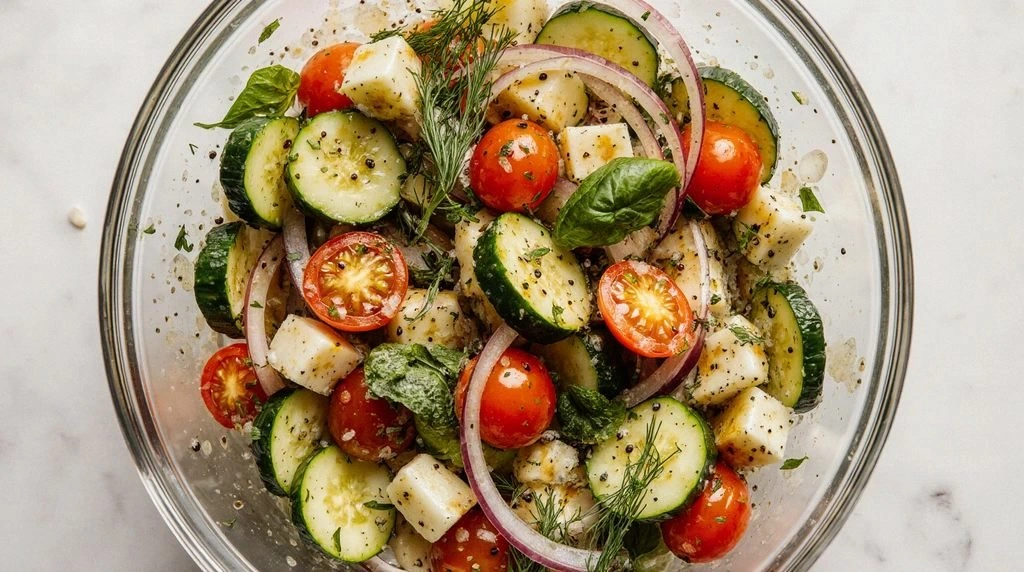
The Method — Step by Step
- Begin by washing all produce under cold running water, ensuring that any dirt or pesticides are removed. Pat the cucumbers dry with a clean towel to prevent excess moisture from diluting the salad. Slice them into thin rounds, about 1/8 inch thick, to maintain a crisp bite. Toss the cucumber slices in a large mixing bowl to evenly distribute the pieces. This step sets the foundation for a uniform texture that will shine throughout the dish.
- Next, thinly slice the red onion into rings or half‑rings, depending on your preference. The onion’s sharpness will cut through the sweetness of the cucumbers, adding depth. Add the sliced onion to the bowl, ensuring it is well distributed. The onion’s juices will mingle with the cucumber, creating a subtle, tangy undertone. This is the first layer of flavor that will build upon the rest.
- Now it’s time to bring the herbs into play. Roughly chop a handful of fresh dill and a few mint leaves, then add them to the bowl. The dill’s bright, almost citrusy notes will elevate the dish, while the mint adds a cooling contrast. Stir gently, making sure the herbs coat each cucumber slice. The aroma will begin to fill the kitchen, signaling that the salad is nearing perfection. Remember, the herbs should be fresh to preserve their vibrant flavor.
- Add the crumbled feta cheese to the bowl. The feta’s salty tang will complement the fresh herbs and cut through the acidity. Gently fold the feta in, ensuring it is distributed evenly. The cheese’s crumbly texture will add a pleasant bite, preventing the salad from feeling too smooth. If you prefer a dairy‑free option, try a sprinkle of nutritional yeast for a cheesy note.
- Introduce the optional olives, which bring a briny depth that contrasts beautifully with the bright vegetables. Slice or pit them as needed, then toss them into the mix. Their saltiness will enhance the overall flavor profile. The olives also add a pop of color, making the salad visually striking. They are especially nice for a Mediterranean twist.
- Now combine the dressings: 2 tablespoons of lemon juice, 1 tablespoon of red wine vinegar, 1 tablespoon of olive oil, 1 teaspoon of sugar, 0.5 teaspoon of salt, and 0.25 teaspoon of freshly ground black pepper. Whisk them together in a small bowl until the sugar dissolves and the mixture is smooth. Pour the dressing over the salad, ensuring every component is coated. This balance of acidity and sweetness is the secret to a harmonious flavor. The dressing should coat each slice, creating a glossy finish.
- Fold in 0.25 cup of plain Greek yogurt, using a gentle spoon motion to avoid breaking the cucumber. The yogurt will create a silky coating that holds the flavors together. The creamy texture will contrast with the crispness of the vegetables, adding depth. Stir until the yogurt is evenly distributed, but keep the salad light. This step is crucial for the final mouthfeel.
- Taste the salad, adjusting seasonings as needed. Add more salt if the dish feels flat, or a splash of lemon if you desire extra brightness. The balance should feel natural, not forced. Let the flavors meld for a minute before serving; this allows the dressing to settle. The final result should be a vibrant, harmonious dish that sings.
That's it — you did it. But hold on, I've got a few more tricks that'll take this to another level...
Now that the salad is assembled, let’s explore how to elevate it further. A simple tweak can transform the dish from good to unforgettable. By experimenting with additional ingredients or subtle changes, you can create a version that’s uniquely yours. These insider tips are designed to help you avoid common pitfalls and unlock the salad’s full potential. You’ll discover how small adjustments can have a big impact on flavor and texture. So, keep reading and let’s take this salad to new heights.
Insider Tricks for Flawless Results
The Temperature Rule Nobody Follows
Temperature is everything when it comes to crispness. Keep cucumbers chilled until you’re ready to assemble the salad; this preserves their crunch. If you let them sit at room temperature for too long, they’ll release moisture and become soggy. A quick dip in ice water before slicing can also help maintain firmness. This simple step ensures each bite is crisp and satisfying.
Why Your Nose Knows Best
Smell is a powerful indicator of freshness. If the cucumbers or herbs lose their aromatic quality, the salad will taste flat. Keep produce refrigerated until use to preserve its scent. A quick sniff before chopping can confirm freshness. Trust your nose; it’s the best judge of quality.
The 5‑Minute Rest That Changes Everything
After tossing the salad, let it rest for five minutes before serving. This allows the flavors to meld and the dressing to coat the vegetables evenly. The rest period also helps the cucumbers reabsorb some of the dressing, enhancing their taste. Skipping this step can result in a salad that feels under‑seasoned.
The Right Knife Makes All the Difference
A sharp knife is essential for clean, even slices. Dull blades create ragged edges that break the cucumber’s structure. A chef’s knife or a dedicated vegetable slicer works best. A clean cut ensures the salad looks polished and the texture remains crisp.
The Power of a Quick Pickle
If you’re craving a tangier bite, add a quick pickle made from vinegar, water, and sugar. This pickling brine can be poured over the salad just before serving. It adds a zesty kick that pairs well with the fresh herbs. The quick pickle also helps preserve the salad’s crunch.
The Final Coat of Oil
A light drizzle of high‑quality olive oil just before serving adds a glossy finish and rounds out the flavors. The oil’s fruity notes complement the lemon and herbs. It also helps the yogurt spread evenly across the cucumber slices. This final touch turns a simple salad into a refined dish.
Creative Twists and Variations
This recipe is a playground. Here are some of my favorite ways to switch things up:
Mediterranean Medley
Add roasted red peppers, sun‑dried tomatoes, and a sprinkle of oregano. Swap feta for halloumi cheese for a firmer bite. The smoky peppers bring depth, while the oregano adds aromatic warmth. This version is perfect for a Mediterranean feast.
Asian Fusion
Replace the lemon with rice vinegar and add a splash of sesame oil. Toss in sliced scallions, a pinch of ginger, and a drizzle of soy sauce. The umami of soy pairs beautifully with the cucumber’s crunch. This twist works wonderfully with sushi or grilled teriyaki chicken.
Summer BBQ
Stir in chopped grilled corn, diced red bell pepper, and a handful of fresh cilantro. Drizzle with a smoky chipotle mayo for an extra kick. The corn adds sweetness, while the chipotle provides heat. This version pairs well with grilled burgers or ribs.
Vegan Delight
Omit the yogurt and feta entirely, using a vegan yogurt alternative. Add a handful of toasted pumpkin seeds for crunch. The seeds provide a nutty flavor that complements the cucumber. This version is both wholesome and satisfying.
Protein‑Packed Power
Top the salad with sliced grilled chicken or tofu cubes for a protein boost. Add a dash of smoked paprika for flavor. The protein elevates the salad into a light main course. This version is ideal for lunch or a post‑workout meal.
Fruit‑Infused Refresh
Incorporate diced mango or pineapple for a tropical twist. Replace the lemon with lime juice for a brighter acidity. The fruit adds natural sweetness, balancing the herbs. This version is perfect for a beach‑side gathering.
Storing and Bringing It Back to Life
Fridge Storage
Store the salad in an airtight container for up to two days. Keep the dressing separate until you’re ready to serve, preventing the cucumbers from becoming soggy. If you need to pre‑make the salad, place the dressing in a small bowl and mix just before eating. This preserves the crispness and flavor integrity.
Freezer Friendly
Freezing is not ideal for this salad due to the cucumber’s high water content. If you must, freeze the diced cucumbers separately and thaw before mixing. The dressing should be added after thawing to maintain texture. Freezing can cause the salad to lose its crunch.
Best Reheating Method
Reheating is unnecessary for a salad, but if you prefer a warm version, gently warm the salad in a skillet over low heat for 2 minutes. Add a splash of water to create steam, keeping the vegetables moist. Avoid high heat, which can overcook the cucumbers. Serve immediately for the best texture.