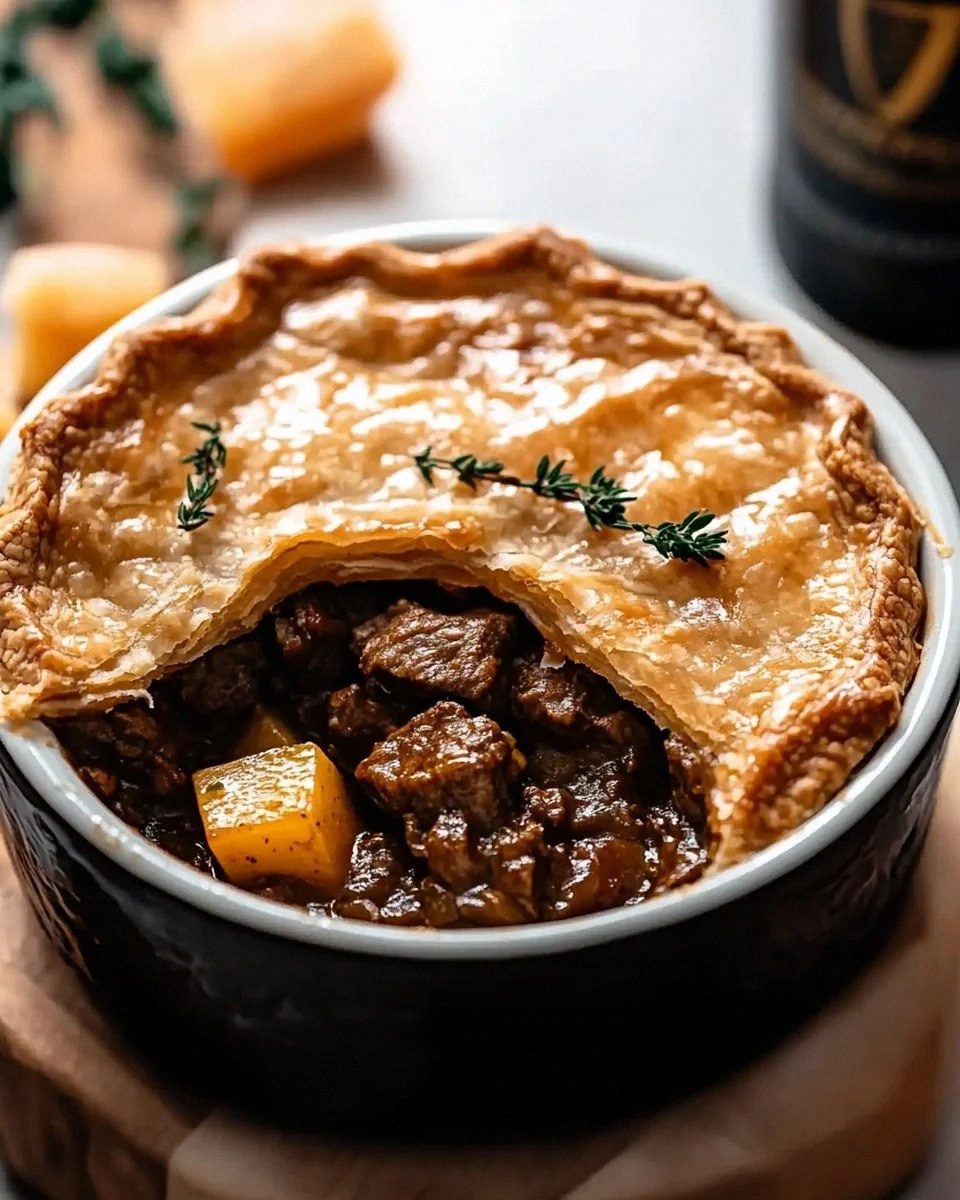
I was standing in my kitchen on a rainy Tuesday, staring at a half‑finished pot of stew that smelled like a pub on a Thursday night, when my roommate dared me to turn that sloppy mess into something that could actually make a grown man weep. The rain was drumming against the windows, the kettle was whistling, and my mind was buzzing with the question: could I coax a Guinness‑infused beef stew into a buttery, flaky crust that would hug the filling like a warm blanket? The answer, my friends, is a resounding yes, and the journey from that soggy pot to a golden‑crowned pot pie is the story I’m about to spill. I’m not just talking about any pot pie; I’m talking about a dish that wraps tender, beer‑braised beef in a puff pastry that shatters with a crisp bite, releasing a cloud of aromatic steam that makes your kitchen feel like a cozy Irish tavern.
Picture this: the first bite lands on your tongue and you’re hit with the deep, malty richness of Guinness, the kind that coats your palate like velvet, followed by melt‑in‑your‑mouth beef that has been simmered for hours until it practically falls apart at the slightest provocation. The vegetables—carrots, celery, and potatoes—have absorbed that stout‑laden broth, becoming sweet, earthy jewels that pop with texture. And then there’s the pastry, buttery and flaky, cracking under the fork with a sound that’s almost musical, like a chorus of tiny applause. The steam that escapes as you cut into it is scented with thyme and bay leaf, a fragrant whisper that tells you you’re about to indulge in something truly special.
What sets this version apart from every other pot pie you’ve ever tried is a handful of bold choices that most home cooks overlook. First, we’re using Guinness stout as the braising liquid, not just a splash of wine or broth, which gives the meat a deep, caramel‑like flavor that no amount of seasoning can replicate. Second, the crust isn’t a generic pie dough; it’s a sheet of puff pastry that rises into airy layers, creating a textural contrast that’s almost addictive. Third, we finish the filling with a quick reduction that concentrates the sauce, turning it into a glossy, spoon‑dripping glaze that clings to every bite. And finally, the entire dish is assembled in a single skillet, which means less mess and more flavor locked in.
I’ll be honest — I ate half the batch before anyone else got a chance to try it, and I’m still not over that moment when the crust first cracked and the aroma hit my nose. I dare you to taste this and not go back for seconds; it’s that good. Okay, ready for the game‑changer? Let me walk you through every single step — by the end, you’ll wonder how you ever made a pot pie any other way.
What Makes This Version Stand Out
- Taste: Guinness adds a deep, slightly bitter maltiness that balances the richness of the beef and butter, creating a flavor profile that’s both comforting and complex.
- Texture: The puff pastry gives a flaky, buttery top that shatters like thin ice, while the filling stays luscious and sauce‑laden.
- Simplicity: Despite the gourmet vibe, the recipe uses pantry staples and a single‑skillet method, making it approachable for weeknight dinners.
- Uniqueness: Most pot pies rely on chicken or turkey; this one stars beef braised in stout, turning a classic into a bold, hearty centerpiece.
- Crowd Reaction: Guests often say, “I’ve never had a pot pie that tastes like a pub dinner,” and they ask for the recipe before the first bite is even over.
- Ingredient Quality: Using a good Irish stout and well‑marbled chuck roast makes the difference between “good” and “legendary.”
- Cooking Method: Slow braising locks in moisture, while the final oven blast gives the pastry that coveted golden finish.
- Make‑Ahead Potential: The filling can be prepared a day ahead, letting the flavors meld even deeper before you crown it with pastry.
Inside the Ingredient List
The Flavor Base
Guinness stout is the heart‑beat of this dish. Its roasted barley notes and subtle coffee‑like bitterness seep into the beef, creating a sauce that’s richer than any stock you could buy. If you skip the stout, you’ll lose that signature depth; a simple beef broth just won’t cut it. For the best result, choose a dry Irish stout with a robust malt profile, and avoid the overly sweet “cream” variants.
Onions, carrots, and celery form the classic mirepoix, providing a sweet, aromatic foundation. Dice them uniformly so they cook evenly and release their sugars at the same rate. If you’re missing any of these, you can substitute with a tablespoon of tomato paste for a hint of acidity, but the traditional trio is unbeatable.
The Texture Crew
Beef chuck, cut into one‑inch cubes, is the star protein. Its marbling ensures the meat stays juicy during the long braise, and the connective tissue breaks down into gelatin, thickening the sauce naturally. Skipping the chuck for a lean cut like sirloin will result in a dry, tough filling that lacks that melt‑in‑your‑mouth quality.
Potatoes, cubed and added halfway through the braise, absorb the stout‑infused broth, turning into buttery, melt‑away bites that add heartiness. If you prefer a lower‑carb version, try cauliflower florets; they’ll soak up the sauce just as well while keeping the dish lighter.
The Unexpected Star
A single sheet of puff pastry may seem simple, but its high butter content is what creates those airy, flaky layers that contrast the rich filling. Keep the pastry chilled until you’re ready to top the pie; warm pastry can become rubbery and lose its lift. If you’re gluten‑free, a store‑bought gluten‑free puff pastry works fine, though the texture will be slightly denser.
A splash of beef broth at the end of the braising process helps deglaze the pan, pulling up the caramelized bits stuck to the bottom. This step is pure magic because those browned bits are flavor gold.
The Final Flourish
Fresh thyme and a bay leaf are the aromatic finishers that round out the stew. Their subtle piney and floral notes lift the heavy stout flavor, preventing it from becoming one‑dimensional. If you’re out of fresh thyme, a pinch of dried thyme works, but add it earlier so it has time to rehydrate.
Salt and freshly ground black pepper are added at the end of the braise, allowing you to fine‑tune the seasoning after the sauce has reduced. Remember, the stout already brings some bitterness, so taste before you over‑salt.
Everything's prepped? Good. Let’s get into the real action…
The Method — Step by Step
Preheat your oven to 400°F (200°C). While the oven warms, pat the beef cubes dry with paper towels; this tiny step is crucial because moisture on the surface will steam the meat instead of searing it. Heat a large, oven‑safe skillet over medium‑high heat and melt the butter. Once the butter foams, add the beef in a single layer, making sure not to crowd the pan. Let each side develop a deep, caramelized crust—listen for that satisfying sizzle; it’s the sound of flavor building.
After the beef is browned, remove it with a slotted spoon and set aside. In the same skillet, add the diced onion, carrots, and celery, stirring until the vegetables soften and the onions turn translucent, about 5 minutes. This is the moment where the kitchen smells like a Sunday roast, and if you’re lucky, you’ll catch a whiff of that sweet, caramelized edge. Sprinkle the flour over the veggies and stir constantly for 2 minutes; this creates a roux that will later thicken the stew without lumps.
Kitchen Hack: Use a whisk instead of a spoon when adding the flour; it prevents clumps and ensures an even coating.Deglaze the pan with the Guinness stout, scraping up every browned bit from the bottom. Those caramelized fragments are flavor powerhouses, and the stout will dissolve them into a silky, dark sauce. Let the mixture simmer for 3–4 minutes, allowing the alcohol to evaporate while the liquid reduces slightly, concentrating the malt sweetness.
Return the browned beef to the skillet, then pour in the beef broth, add the thyme, bay leaf, and a pinch of salt and pepper. Stir everything together, bring the pot to a gentle boil, then lower the heat to a simmer. Cover and let it braise for 1½ to 2 hours, or until the meat is fork‑tender. During this time, the sauce will thicken naturally; if it looks too thin, uncover for the last 15 minutes to let excess liquid evaporate.
About 30 minutes before the beef is done, add the cubed potatoes to the pot. They’ll absorb the stout‑infused broth and become melt‑in‑your‑mouth soft. Keep an eye on them; you want them tender but not falling apart. This timing ensures the potatoes stay distinct pieces, adding texture to each bite.
When the beef is perfectly tender and the sauce has thickened to a glossy sheen, remove the bay leaf. Taste and adjust seasoning—this is where you decide if you need a splash more salt or a grind of pepper. Now, pre‑heat the oven again to 425°F (220°C) for that final burst of heat that will puff up the pastry.
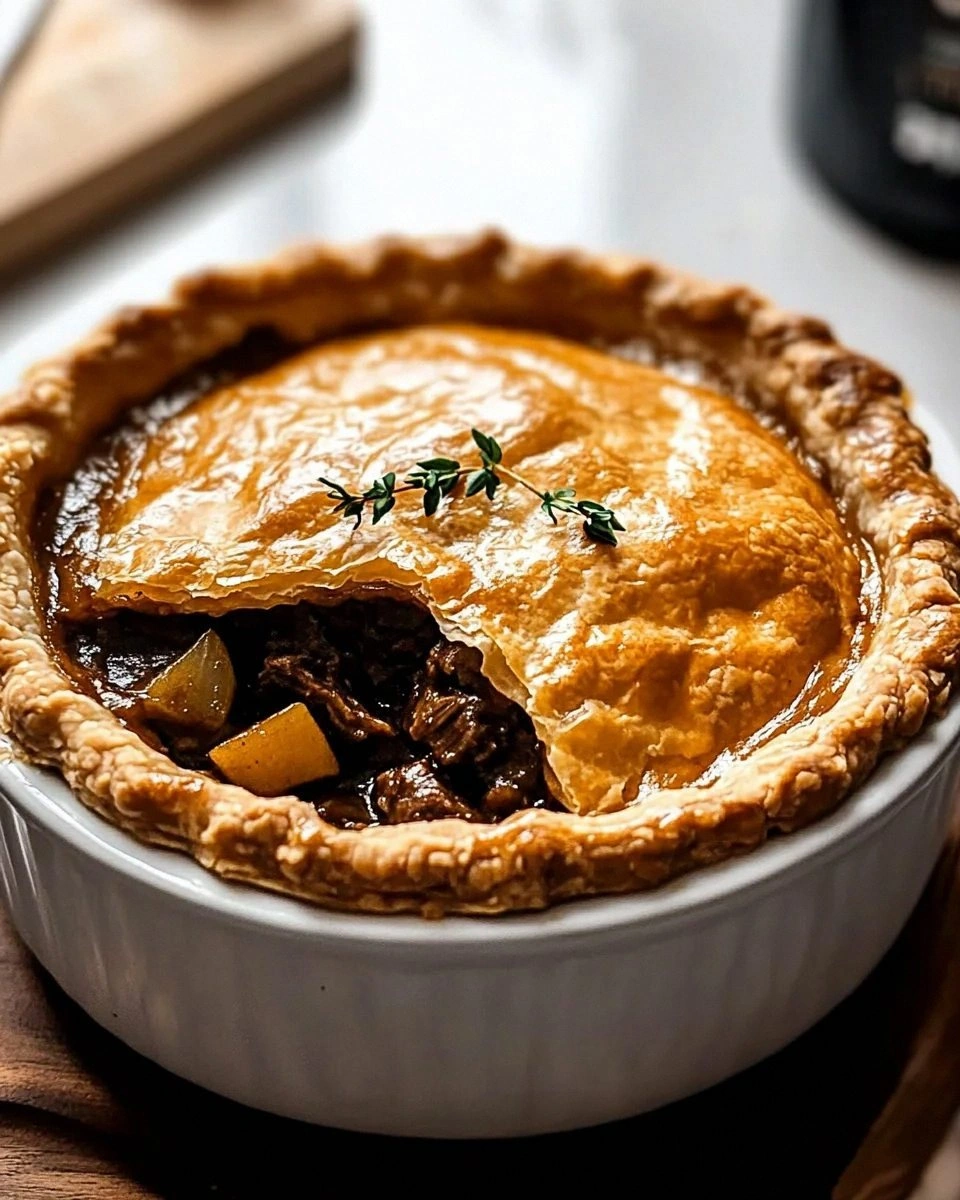
Roll out the puff pastry sheet on a lightly floured surface to match the diameter of your skillet (or a 9‑inch pie dish). Brush the top of the pastry lightly with the beaten egg; this will give it a gorgeous golden sheen once baked. Carefully lay the pastry over the bubbling stew, tucking the edges down the sides of the skillet. Use a sharp knife to cut a few steam vents—these tiny windows let the pressure escape and keep the crust from puffing unevenly.
Watch Out: If you place the pastry too early, the steam can make the bottom soggy; wait until the filling is fully reduced before covering.Brush the exposed pastry with more egg wash for extra shine, then slide the skillet into the oven. Bake for 20–25 minutes, or until the pastry is puffed, golden‑brown, and cracking at the edges. The aroma at this point will be so intoxicating that you might have to step outside to avoid drooling.
Remove the pot pie from the oven and let it rest for 10 minutes. This resting period allows the sauce to settle, making the slice cleaner and preventing the filling from spilling out. Serve hot, perhaps with a simple green salad to cut through the richness, and watch as your guests marvel at the glossy, beer‑infused gravy.
That’s it — you did it. But hold on, I’ve got a few more tricks that'll take this to another level…
Insider Tricks for Flawless Results
The Temperature Rule Nobody Follows
Never start the braise with a cold skillet; a hot pan ensures the beef sears instantly, locking in juices. I once tried a “slow start” and ended up with a stew that tasted like boiled meat. The rule of thumb: preheat your pan for at least 2 minutes before adding butter.
Why Your Nose Knows Best
Your sense of smell is the ultimate doneness gauge. When the broth starts to smell nutty and slightly caramelized, you’re close to the perfect reduction. If you’re ever unsure, take a tiny spoonful and let it cool; the flavor will be more concentrated than when hot.
The 5‑Minute Rest That Changes Everything
Letting the pot pie sit after it comes out of the oven isn’t just about aesthetics; it allows the starches in the potatoes to re‑absorb the sauce, creating a silkier mouthfeel. Skipping this step results in a runny filling that slides off the plate.
Egg Wash Perfection
For a truly glossy crust, beat the egg with a splash of milk instead of water. The added fat gives the pastry a richer color. Apply the wash in two thin layers, letting the first dry before the second for maximum shine.
The Secret of the Butter‑Brush
Brushing the bottom of the skillet with melted butter before adding the filling creates a barrier that prevents the pastry from becoming soggy. It also adds a subtle buttery flavor that seeps into the edges of the crust.
Creative Twists and Variations
This recipe is a playground. Here are some of my favorite ways to switch things up:
Smoky Chipotle Twist
Add one finely chopped chipotle pepper in adobo sauce to the mirepoix for a subtle heat and smoky undertone. This version pairs beautifully with a cold lager.
Mushroom Medley
Swap half of the beef for a mix of cremini, shiitake, and oyster mushrooms. The earthy umami amplifies the stout flavor and makes the dish suitable for vegetarians who still crave depth.
Herb‑Infused Puff
Mix fresh rosemary and thyme into the egg wash before brushing the pastry. The herbs will bake into the crust, giving each bite a fragrant lift.
Cheddar‑Strewn Top
Scatter a generous handful of sharp cheddar over the pastry before baking. The cheese melts and browns, adding a salty crunch that contrasts the sweet stout.
Root Veggie Remix
Include parsnips and turnips alongside carrots for a sweeter, earthier profile. These vegetables hold up well during the long braise and add a splash of color.
Storing and Bringing It Back to Life
Fridge Storage
Allow the pot pie to cool to room temperature, then cover tightly with foil or a lid. It will keep for up to 3 days in the refrigerator. Reheat in a 350°F oven for 15‑20 minutes, uncovered, to revive the crisp crust.
Freezer Friendly
Wrap the cooled, unbaked pie tightly in plastic wrap, then in aluminum foil. It freezes beautifully for up to 2 months. When ready, bake from frozen at 425°F for 35‑40 minutes, adding a splash of water to the filling before covering with foil to prevent drying.
Best Reheating Method
For leftovers, place a slice on a baking sheet, brush the crust with a teaspoon of melted butter, and bake at 375°F for 12‑15 minutes. Add a tiny splash of water to the filling before covering with foil; the steam will bring the sauce back to its original silkiness.