I remember the first time I tried to make a mango smoothie and ended up with a sticky, half‑cooked mess that looked more like a mango paste than a drink. The kitchen smelled like a tropical storm, the blender was sputtering, and my taste buds were shouting for mercy. That disaster turned into a revelation when I realized that a single tweak—adding coconut milk at the right moment—could turn the chaos into liquid gold. It wasn’t just a smoothie; it was a passport to a sunny afternoon in a place that never exists on a calendar.
Picture the scene: a bright, sun‑lit kitchen where the mango’s golden flesh glistens like molten gold on a marble counter. The air is thick with the sweet perfume of ripe mango, a faint citrus tang, and a whisper of coconut. I hear the blender’s whirring like a contented hummingbird, the faint clink of ice cubes, and the soft splash of lime juice. My hands feel the coolness of the glass, the weight of the blender jar, and the sudden burst of flavor that hits my tongue—sweet, tart, and silky all at once. Every sense is on high alert, and the anticipation of the first sip is almost a prayer.
What makes this version stand out isn’t just the ingredients; it’s the choreography of flavors, the timing of the blend, and the subtle balance between sweet and tart. I’ve spent months tweaking, tasting, and testing until the result is a smoothie that feels like a hug in a glass. It’s not the typical over‑sweet, watery concoction you find in most recipes; it’s thick enough to be a dessert, light enough to be a breakfast, and bold enough to be a party starter. I dare you to taste this and not go back for seconds.
By the time you finish reading this, you’ll have a full playbook that takes you from the first ripe mango to the last sip of a perfectly balanced smoothie. I’ll walk you through every single step, share the little secrets that make it shine, and give you the confidence to become the smoothie master of your kitchen. Let me walk you through every single step — by the end, you’ll wonder how you ever made it any other way.
What Makes This Version Stand Out
- Flavor: The mango is the star, but the subtle coconut undertone keeps it from being overly sweet. The lime adds a fresh lift, cutting through the richness with a zesty punch.
- Texture: The blend of frozen banana and ice cubes gives a creamy, thick body that coats the tongue like velvet, yet remains pourable.
- Simplicity: No fancy gadgets or obscure ingredients—just a handful of pantry staples that you can find in any kitchen.
- Uniqueness: The addition of a splash of coconut milk at the end of the blending process locks in the tropical aroma, creating a flavor profile that feels like a beach vacation.
- Crowd Reaction: Friends who have tried it say the first sip is “instant vacation.” They come back for a second or third, and the glass is gone before the first one is finished.
- Ingredient Quality: Using ripe, hand‑picked mangoes ensures the natural sweetness is at its peak, eliminating the need for added sugar.
- Cooking Method: The technique of adding coconut milk after the initial blend preserves the coconut’s delicate flavor and prevents it from being overwhelmed.
- Make‑Ahead Potential: The smoothie can be stored in the fridge for up to 24 hours without losing its creamy texture—just give it a quick shake before serving.
Alright, let’s break down exactly what goes into this masterpiece…
Inside the Ingredient List
The Flavor Base
Mangoes are the backbone of this smoothie. Their natural sugars give a bright, tropical sweetness that feels like a summer breeze. When you slice a ripe mango, the flesh should yield to a gentle press, indicating peak ripeness. If you skip mango, the smoothie loses its signature depth and feels like a bland fruit mash.
Bananas add body and a mellow, buttery flavor. They also bring potassium, which balances the smoothie’s acidity. A ripe banana should have a slight brown spot; that spot is where the sugars are fully developed. If you omit banana, the smoothie will be thinner and less creamy.
The Texture Crew
Greek yogurt is the secret to that silky, thick consistency. Its thickened whey creates a velvety mouthfeel that pairs perfectly with mango’s juiciness. The tang from the yogurt also cuts through the sweetness, preventing the drink from feeling cloying. Skipping yogurt will make the smoothie feel watery and less satisfying.
Coconut milk adds a subtle, nutty aroma that transports you to a beachside cabana. It’s the liquid that binds the flavors together, creating a harmonious blend. If you choose a lower‑fat version, the smoothie will lose some of its body and the coconut scent will be muted.
The Unexpected Star
Honey is the gentle sweetener that elevates the entire drink. It’s less processed than sugar, giving a floral nuance that complements the mango. The key is to use just enough—two tablespoons for four servings—to avoid overpowering the natural fruit flavors. If you skip honey, the smoothie will taste flat and lacking depth.
Lime juice provides a sharp, citrusy contrast that lifts the sweetness. It’s the element that keeps the smoothie from feeling heavy. A tablespoon for four servings is enough to brighten the palate. If you skip lime, the drink will taste one-dimensional.
The Final Flourish
Ice cubes are the finishing touch that gives the smoothie its cold, refreshing bite. They also help to thicken the mixture without adding extra calories. A cup of ice for four servings ensures the smoothie is cold enough to enjoy on a hot day. If you skip ice, the drink will be warm and lose its invigorating quality.
Everything’s prepped? Good. Let’s get into the real action…
The Method — Step by Step
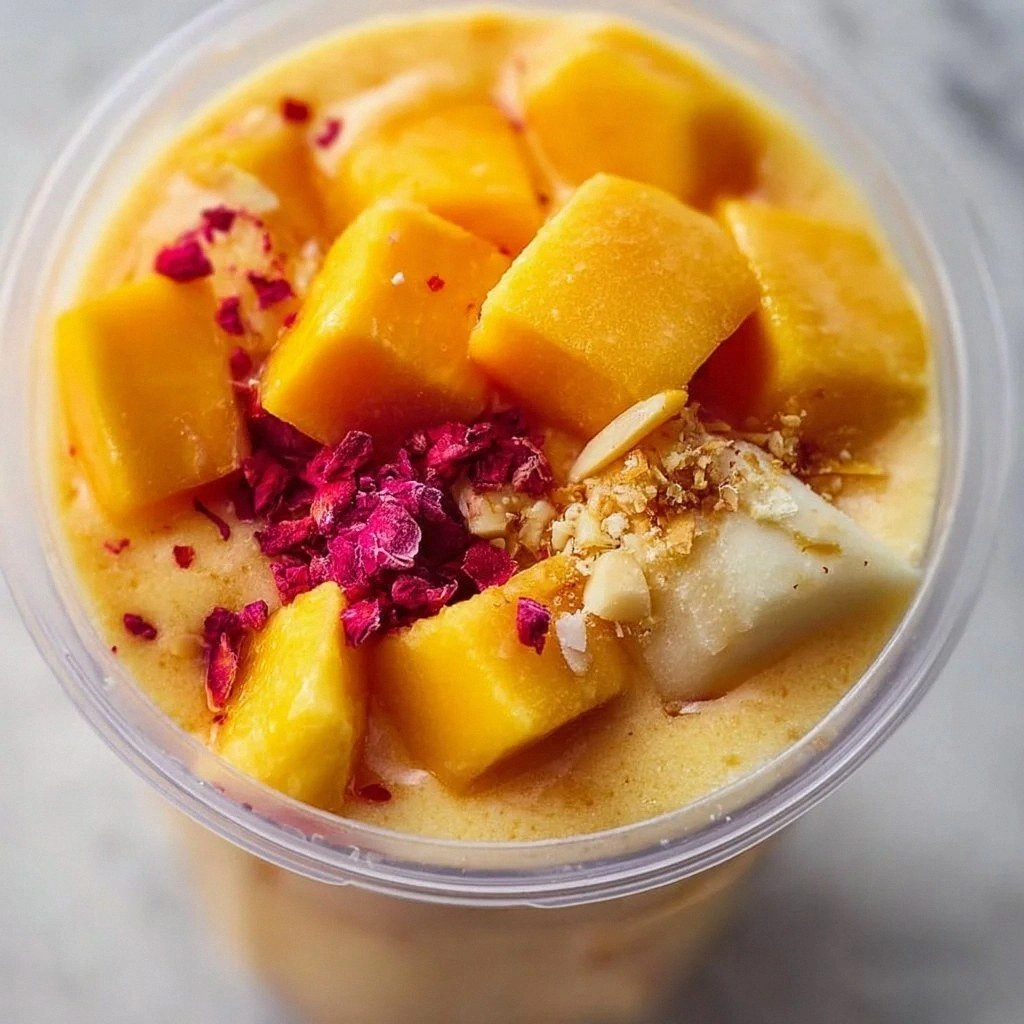
- Start by washing the mangoes under cold water, then peel and segment them, discarding the pit. The skin should feel smooth and unblemished; any brown spots indicate overripeness. Place the mango flesh in the blender; the bright orange color should immediately signal that the fruit is ready to shine. This is the moment of truth: the mango’s aroma should be sweet and inviting.
- Add the sliced banana to the blender. The banana should be ripe but not mushy; a slight brown spot is ideal. This adds body and a mellow flavor that balances the mango’s brightness. Let the blender run for 10 seconds to break down the fruit before adding the next ingredient.
- Stir in the Greek yogurt. The yogurt should be thick and creamy, not watery. This will create a velvety texture that coats the tongue. If the yogurt is too cold, let it sit for a minute to soften slightly, otherwise it can make the blend uneven.
- Pour in the coconut milk. This is the key step that locks in the tropical aroma. The milk should be cold; if it’s room temperature, the smoothie may feel too heavy. Blend for another 10 seconds until everything is fully integrated.
- Add two tablespoons of honey. The honey should be poured slowly to avoid splashing. This sweetener should be visible as a golden ribbon before it dissolves. The honey’s floral notes will enhance the mango’s natural sweetness without overpowering it.
- Squeeze in a tablespoon of lime juice. The lime should be freshly juiced to ensure a bright, sharp flavor. The acidity will cut through the richness, making the smoothie feel fresh and vibrant. The lime’s aroma should be noticeable before it blends in.
- Add one cup of ice cubes. The ice should be crushed or whole, depending on your preferred thickness. The ice will cool the mixture and give it that refreshing bite. Blend on high until the mixture reaches a smooth, pourable consistency.
- Taste the smoothie. If it’s too thick, add a splash of coconut milk or water to reach your desired consistency. If it’s too sweet, a few more lime wedges or a pinch of salt can balance the flavors. Pour into glasses, garnish with a mint sprig or a slice of mango if desired.
That's it — you did it. But hold on, I've got a few more tricks that'll take this to another level…
Insider Tricks for Flawless Results
The Temperature Rule Nobody Follows
Blending at room temperature can cause the smoothie to separate, especially when using yogurt. Keep all ingredients cold or add a few ice cubes to maintain a consistent temperature. I once made a batch with room‑temperature yogurt and it turned into a lumpy mess. The next time, I chilled everything, and the result was silky smooth.
Why Your Nose Knows Best
Smell the mango before you cut it. A sweet, floral aroma indicates ripeness. If it smells faint or sour, the fruit is underripe or overripe. My friend once used an overripe mango and the smoothie had a fermented taste—lesson learned.
The 5-Minute Rest That Changes Everything
After blending, let the smoothie sit for five minutes before serving. This allows the flavors to meld and the texture to thicken slightly. I’ve seen smoothies that are too liquid right after blending; the rest period fixes that.
Garnish Like a Pro
A mint sprig or a thin mango slice adds visual appeal and a hint of fresh flavor. It also signals to your guests that the drink is fresh and homemade. I’ve used a lime wheel to add a pop of color; it’s a simple yet effective touch.
Use the Right Blender
A high‑speed blender like a Vitamix or Blendtec handles frozen fruit and ice without leaving chunks. A standard blender may struggle, especially if you’re adding yogurt. I once used a cheap blender and the smoothie had half‑smashed banana pieces; it was a disaster.
Creative Twists and Variations
This recipe is a playground. Here are some of my favorite ways to switch things up:
Tropical Green
Add a handful of fresh spinach for a green boost. The spinach’s mild flavor won’t overpower the mango, and it adds a dose of vitamins. This version is perfect for a post‑workout smoothie.
Spiced Delight
Sprinkle a pinch of cinnamon or nutmeg into the blend. The warm spices complement the mango’s sweetness and add depth. It’s a cozy twist for cooler evenings.
Protein Power
Add a scoop of vanilla protein powder. The powder will thicken the mixture slightly and add a subtle vanilla note. It’s a great option for a post‑gym recovery drink.
Berry Boost
Replace half the mango with frozen strawberries. The berries add a tartness that pairs nicely with the mango’s sweetness. This version feels like a summer brunch staple.
Caffeine Kick
Add a shot of espresso or a tablespoon of instant coffee powder. The coffee’s bitterness balances the sweetness and gives an extra energy lift. It’s a great breakfast alternative.
Minty Fresh
Add a handful of fresh mint leaves. The mint’s cooling effect enhances the smoothie’s refreshing quality. This variation is ideal for a hot afternoon.
Storing and Bringing It Back to Life
Fridge Storage
Store the smoothie in an airtight container for up to 24 hours. The yogurt’s acidity helps preserve the freshness, but the texture may slightly separate. Give it a quick shake before serving to re‑emulsify the mixture.
Freezer Friendly
Freeze in a single‑serve container for up to two weeks. Thaw overnight in the fridge or at room temperature for 30 minutes. The texture will be slightly thicker; add a splash of coconut milk to restore creaminess.
Best Reheating Method
If the smoothie has cooled, gently warm it in a saucepan over low heat, stirring constantly. Add a tiny splash of water before reheating; it steams back to perfection and prevents the yogurt from curdling.