I still remember the cabbage roll catastrophe of 2019 like it was yesterday. There I stood, apron splattered like a Jackson Pollock painting, staring at a pot of what looked like green baseballs floating in pink bathwater. My Hungarian grandmother would have wept. The cabbage was rubbery, the beef tasted like cardboard confetti, and the rice inside had somehow achieved the texture of tiny pebbles. I swore off cabbage rolls forever that night, vowing to stick to safer culinary territory like scrambled eggs or toast.
Fast forward three months, and I'm at my friend Marisol's dinner party, watching her pull a casserole dish from the oven that made the entire room smell like Sunday dinner at a European grandmother's house. Golden cabbage parcels nestled in a sauce so fragrant it should be illegal. She caught me eyeing them suspiciously and said, "Don't even think about it — these will change your life." I rolled my eyes but took a bite anyway. The cabbage melted like silk, the beef was juicy and packed with flavor, and the sauce? Let's just say I may have licked my plate when nobody was looking.
That night, I begged, pleaded, and may have offered my firstborn child for the recipe. Marisol laughed and said, "It's not magic — it's just that everyone overcomplicates it." She walked me through her method, and I discovered I'd been committing every possible cabbage roll sin: boiling the cabbage to death, using raw rice (rookie mistake!), and treating the sauce like an afterthought instead of the star attraction.
Now I'm practically evangelical about these cabbage rolls. This version will ruin you for all others — I dare you to taste one and not immediately start plotting when you can make them again. The secret lies in treating each component with respect: quick-blanched cabbage leaves that stay vibrant and tender, a beef mixture that's basically a meatball in disguise, and a tomato sauce so good you'll want to drink it with a straw. Picture yourself pulling this out of the oven, the whole kitchen smelling like you've been transported to a cozy Eastern European kitchen where grandmothers guard family recipes like state secrets. Stay with me here — this is worth it.
What Makes This Version Stand Out
Revolutionary Rice Method: Instead of dumping raw rice into the meat mixture and hoping for the best (spoiler: it never works), we use par-cooked rice that finishes cooking inside the rolls. This means no crunchy surprises or mushy disasters — just perfectly tender grains that know their place.
The Two-Step Cabbage Technique: Most recipes tell you to core and boil the whole head until it's limp and gray. We flash-blanch the leaves for exactly 90 seconds, preserving their color and nutrients while making them pliable enough to roll. The result? Cabbage that actually tastes like cabbage, not wet paper towels.
Umami Bomb Sauce: While others are content with plain tomato sauce, we build layers of flavor with caramelized onions, smoked paprika, and a secret ingredient that makes people ask, "What is that amazing taste?" (It's Worcestershire sauce, but don't tell anyone I told you).
Make-Ahead Magic: These rolls actually taste better the next day, which means you can prep the whole pan, refrigerate overnight, and bake when guests arrive. The flavors meld and deepen, making you look like a culinary genius with minimal effort.
Texture Paradise: Every bite gives you the perfect balance — tender cabbage giving way to juicy beef, punctuated by soft rice and enveloped in silky sauce. No more monotonous mush or tough, chewy disappointments.
Family-Approved Crowd Pleaser: I've served these to picky toddlers, skeptical teenagers, and macho relatives who claimed they "don't eat that healthy crap." They all went back for seconds, and one nephew asked if I could make them every week. That's when you know you've got a winner.
Fail-Proof Assembly: Unlike those finicky recipes that require surgical precision, these rolls forgive you. Overstuffed one? No problem. Tear in the cabbage? Just patch it with another leaf. This is cooking for real people, not perfectionists.
Alright, let's break down exactly what goes into this masterpiece...
Inside the Ingredient List
The Flavor Base
The humble onion becomes something extraordinary when you treat it right. We're using yellow onions here because they strike the perfect balance between sweet and sharp, melting into the sauce like savory candy. Dice them small enough that they disappear into the sauce but large enough that you still get delightful bits of caramelized goodness in every bite. If you think you can skip the onion because someone in your house claims they "don't like onions," I promise they'll never know they're there — they just add depth and body without any noticeable onion pieces.
Garlic is non-negotiable here, folks. I'm using a whopping six cloves because we're building flavor that can stand up to the beef and cabbage. Mince it fine so it distributes evenly, and add it at just the right moment so it perfumes the oil without turning bitter. Fresh garlic makes all the difference — those jars of pre-minced stuff taste like sadness and preservatives.
The Texture Crew
Ground beef is the star protein, but not just any ground beef will do. Skip the lean stuff here — you need 80/20 for maximum juiciness. Yes, I know it's fattier, but that's where the flavor lives, and most of it renders out anyway. The fat bastes the rice and keeps everything moist, which is especially important since we're not pre-cooking the beef mixture. Look for bright red beef with good marbling, and if your butcher will grind it fresh, even better.
Long-grain rice is our grain of choice because it stays separate and fluffy, unlike short-grain which can turn gummy. We're cooking it halfway before adding it to the meat mixture — this prevents the raw-rice-pebble situation that ruins so many cabbage rolls. The par-cooking also lets the rice absorb some of the meat juices as it finishes cooking, creating little flavor bombs throughout each roll.
The Unexpected Star
Here's where things get interesting — we're adding a touch of grated carrot to the meat mixture. Before you click away in horror, hear me out. The carrot adds subtle sweetness, moisture, and those tiny orange flecks make the filling look more appealing. It also stretches the meat further without anyone feeling cheated. My grandmother used to say the carrot makes the meat "happy," and who am I to argue with grandma wisdom?
The Final Flourish
The tomato sauce isn't just any tomato sauce — it's a carefully balanced blend of crushed tomatoes for body, tomato paste for intensity, and a touch of brown sugar to round out the acidity. The smoked paprika adds warmth and depth, while the bay leaf perfumes everything with an earthy aroma that screams comfort food. Don't even think about using that watery, bland tomato sauce from a jar. We're building something special here.
Everything's prepped? Good. Let's get into the real action...
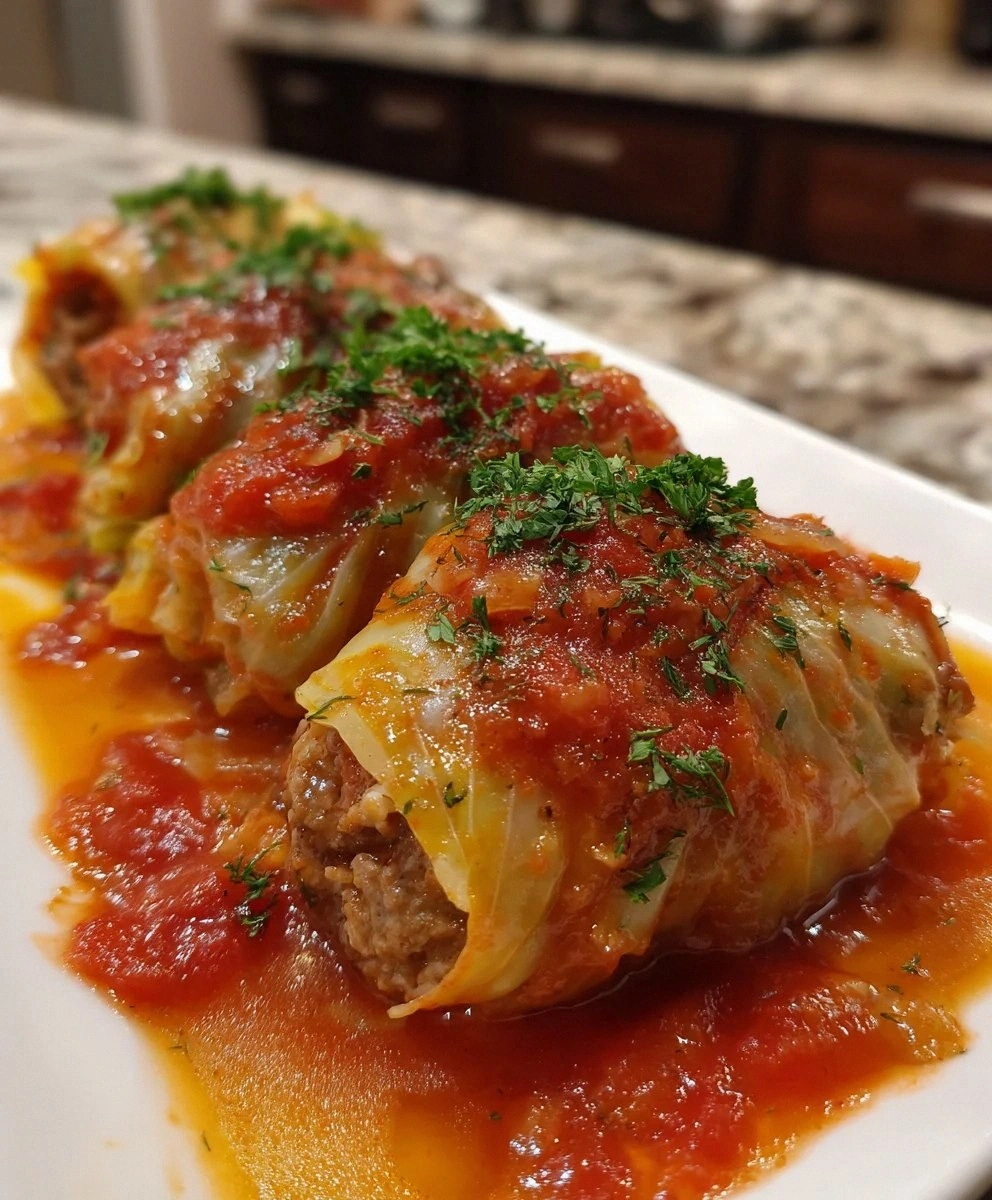
The Method — Step by Step
Start by preparing your cabbage because this step sets the foundation for everything else. Remove the tough outer leaves and core the cabbage using a sharp knife, angling it at 45 degrees to create a cone-shaped removal. Bring a large pot of salted water to a rolling boil — it should taste like the ocean. Drop the whole head in for exactly 90 seconds, then remove and immediately plunge into an ice bath. This shocking stops the cooking process and sets the bright green color. The leaves should peel away easily now, but if you meet resistance, return the cabbage to the boiling water for another 30 seconds. You're looking for leaves that bend without snapping, with a vibrant color that makes you think of spring gardens.
While your cabbage drains, start the sauce in a heavy-bottomed pot that distributes heat evenly. Heat the olive oil over medium heat until it shimmers like a mirage, then add your diced onions with a generous pinch of salt. Here's the key — don't rush this step. Let the onions cook slowly for about 8 minutes, stirring occasionally, until they turn translucent and start to develop golden edges. Your kitchen should start smelling like someone's cooking Sunday dinner. Add the garlic and cook for another minute until fragrant but not browned, because burnt garlic turns bitter and will haunt your sauce like a culinary ghost.
Now comes the fun part — building the sauce that will make people propose marriage. Stir in the tomato paste and let it cook for 2 minutes, which caramelizes the sugars and deepens the flavor. The paste will darken from bright red to a brick color, and that's your cue to add the crushed tomatoes, smoked paprika, brown sugar, and bay leaf. Bring everything to a gentle simmer, then reduce the heat to low and let it bubble away while you work on the filling. The sauce should thicken slightly and coat the back of a spoon like velvet. Taste and adjust seasoning — it should make you want to eat it with a spoon right now.
For the filling, combine your ground beef, par-cooked rice, grated carrot, egg, and seasonings in a large bowl. Use your hands — yes, your actual hands — because tools can't feel when the mixture is properly combined. Mix just until everything comes together; overworking makes tough filling. The mixture should feel moist but not wet, cohesive but not pasty. Cook a tiny patty in a skillet and taste it — this is your chance to adjust seasoning before you commit to rolling dozens of them. The cooked test piece should be juicy, well-seasoned, and make you immediately want to eat the raw mixture (don't, but you'll want to).
Lay out your cabbage leaves on a clean kitchen towel, patting them dry so the filling adheres properly. Place a leaf vein-side up on your work surface, with the stem end closest to you. Add about 2 tablespoons of filling near the stem end, shaping it into a small log. Fold the stem end over the filling, then fold in the sides like you're wrapping a burrito, and roll away from you to form a tight package. Don't overfill — the rice will expand during cooking, and you want the rolls to hold their shape. If a leaf tears, just patch it with another small piece of cabbage. Nobody will know once it's covered in sauce.
Preheat your oven to 375°F because temperature matters more than you think. Too low and the rolls stew in their own juices, making soggy cabbage. Too high and the sauce breaks, separating into an unappetizing mess. Spread a thin layer of sauce on the bottom of a baking dish — this prevents sticking and gives the bottom rolls something to swim in. Arrange your rolls seam-side down, nestling them close but not crowded. They should look like little soldiers standing at attention, ready for their sauce bath.
Pour the remaining sauce over the rolls, making sure each one gets coated but not drowned. The sauce should come about halfway up the sides of the rolls — they need to be moistened but not swimming. Cover the dish tightly with foil, crimping the edges to create a steamy environment that cooks everything gently. Slide it into the oven and set a timer for 45 minutes. Walk away and let the magic happen. Your house will start smelling like you've been transported to a cozy kitchen in Krakow.
After 45 minutes, remove the foil and prepare for the grand reveal. The sauce should be bubbling gently, the rolls plump and firm, and the aroma should make you weak in the knees. Baste the rolls with the sauce, then return to the oven uncovered for another 15 minutes. This final step concentrates the flavors and gives the tops a slight caramelization that adds depth. Let them rest for 10 minutes before serving — I know, I know, it's torture, but this allows the juices to redistribute and prevents molten-hot sauce from burning your tongue.
That's it — you did it. But hold on, I've got a few more tricks that'll take this to another level...
Insider Tricks for Flawless Results
The Temperature Rule Nobody Follows
Room temperature ingredients aren't just chef snobbery — they actually make a difference. Take your ground beef out of the fridge 30 minutes before mixing. Cold beef doesn't bind properly with the other ingredients, leading to crumbly filling that falls apart. Same goes for your egg — room temperature eggs incorporate more evenly and help bind everything together. If you're short on time, submerge the egg in warm water for 5 minutes while you prep other ingredients. This small step prevents the filling from shrinking and toughening during cooking.
Why Your Nose Knows Best
Trust your senses at every stage. The onions should smell sweet, not sharp, when they're properly caramelized. The sauce should make you want to inhale deeply — if it smells flat or too acidic, add a pinch more brown sugar. When you cook your test patty of filling, it should taste seasoned but not salty, because the flavors concentrate as the rolls bake. And here's the real secret: if the raw mixture smells amazing, the cooked version will be out of this world. If it smells bland or off, adjust now before you commit to rolling everything.
The 5-Minute Rest That Changes Everything
I know you're hungry and the rolls smell incredible, but those 5 minutes of resting time aren't optional — they're transformative. During the rest, the rice finishes absorbing any remaining liquid, the filling sets slightly so the rolls hold together when you serve them, and the sauce thickens to the perfect consistency. Use this time to set the table, open a bottle of wine, or just bask in the glory of what you've created. Your patience will be rewarded with rolls that don't fall apart when you serve them and sauce that clings instead of running all over the plate.
Creative Twists and Variations
This recipe is a playground. Here are some of my favorite ways to switch things up:
The Mediterranean Vacation
Swap the ground beef for a mix of lamb and beef, add crumbled feta to the filling, and season with oregano and mint. Use crushed tomatoes seasoned with cinnamon and a bay leaf from Greece. The result tastes like you're dining in a taverna overlooking the Aegean Sea. Serve with a side of tzatziki for the complete experience. Even my Greek neighbor approved, which is basically like getting knighted in the culinary world.
The Spicy Southwest
Replace half the ground beef with chorizo, add diced jalapeños to the filling, and use fire-roasted tomatoes with chipotle peppers in adobo sauce. The smoky heat builds gradually, making you reach for your water glass in the best way. Top with queso fresco and fresh cilantro for a fusion that shouldn't work but absolutely does. My spice-loving friend calls these "cabbage rolls with attitude."
The Veggie Powerhouse
Use finely diced mushrooms and lentils instead of beef, add grated zucchini to the filling, and boost the umami with soy sauce and tomato paste. Even dedicated carnivores have asked for seconds of this version. The mushrooms provide meaty texture while the lentils give you that satisfying protein hit. Plus, you can eat twice as many without the meat coma afterward.
The Comfort Food Deluxe
Add cooked bacon to the filling, use beef broth instead of water when par-cooking the rice, and stir a spoonful of sour cream into the sauce for richness. This is what you make when someone needs a food hug — it's like cabbage rolls and beef stroganoff had a beautiful baby. Perfect for those "I need to eat my feelings" days when salad just won't cut it.
The Asian Fusion
Season the beef with ginger, garlic, and scallions, add water chestnuts for crunch, and use a sauce made with hoisin, rice vinegar, and a touch of honey. The familiar format with unexpected flavors makes people do a double-take, then reach for another roll. Garnish with sesame seeds and scallion greens for a dish that bridges comfort food and exotic adventure.
The Breakfast Surprise
Make mini rolls using small cabbage leaves, fill them with breakfast sausage and par-cooked hash browns, and serve them in a pool of creamy sausage gravy. These are dangerous at brunch gatherings — people pop them like appetizers, then wonder why they're too full for the main course. I've started making double batches because they disappear faster than gossip at a family reunion.
Storing and Bringing It Back to Life
Fridge Storage
These rolls keep beautifully in the refrigerator for up to 4 days, which makes them perfect for meal prep or lazy weeknight dinners. Store them in an airtight container with some of the sauce spooned over the top to prevent drying. If you have rolls and sauce separate, store them that way — the rolls stay firmer and you can control the sauce-to-roll ratio when reheating. Let them cool completely before refrigerating; putting hot rolls in the fridge creates condensation that makes everything soggy and sad.
Freezer Friendly
These rolls freeze like champions, making them perfect for new parents, busy professionals, or anyone who likes having dinner insurance in the freezer. Freeze them in individual portions so you can pull out exactly what you need — no more defrosting a whole pan for one serving. Wrap each roll tightly in plastic wrap, then place in a freezer bag with the air pressed out. They'll keep for up to 3 months, though honestly, they've never lasted that long in my house. Thaw overnight in the refrigerator for best results, though you can reheat from frozen in a pinch.
Best Reheating Method
The microwave works in emergencies, but the oven brings these rolls back to their former glory. Place them in a baking dish with a splash of water or broth, cover with foil, and heat at 350°F for about 20 minutes. The steam rehydrates the cabbage and prevents the filling from drying out. If you're reheating from frozen, add 10-15 minutes to the time. For individual rolls, the air fryer works wonders — 350°F for 8-10 minutes gives you hot centers with slightly crispy edges that add textural interest.