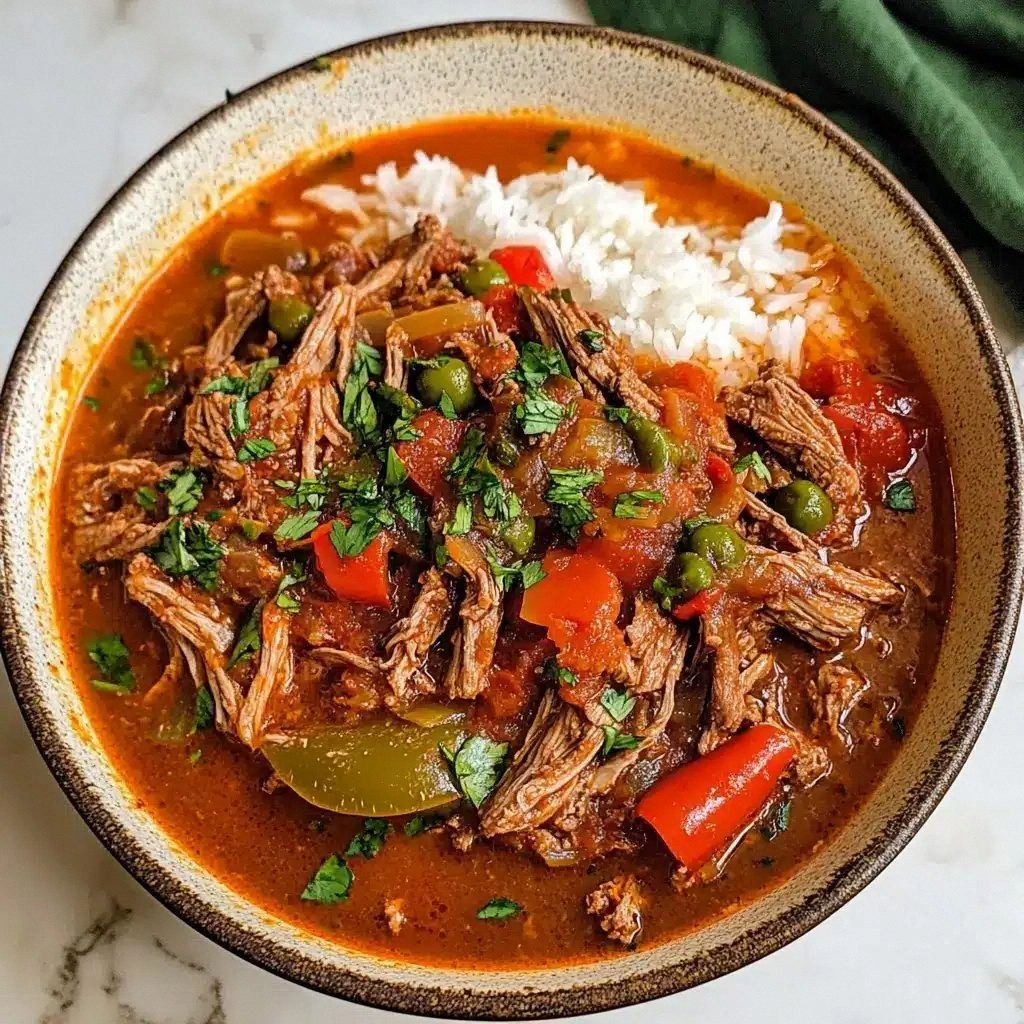
When the kitchen lights flickered and the old stove hissed like a tired dragon, I realized I had a culinary crisis on my hands. My friend had dared me to recreate her grandmother’s Ropa Vieja, a dish that had always seemed to escape my grasp with its elusive flavor balance. I stared at the raw flank steak, the bright red bell pepper, and the dusty can of diced tomatoes, feeling the weight of the challenge. The room smelled of onions and garlic, the air thick with anticipation. I knew this was a test of patience, precision, and a touch of culinary audacity.
I remember the first time I tried to shred the beef. The meat was stubborn, refusing to give up its tender fibers. The skillet was a battlefield where oil met heat, producing a sizzle that echoed through the kitchen like applause. My fingers slipped on the cutting board, but I kept chopping until the meat softened into silky strands. That moment of triumph felt like a secret handshake between me and the dish.
What makes this version stand out is a blend of authenticity and innovation. I used a slow‑roast technique that preserves the beef’s natural juices, then shredded it while it’s still hot to lock in moisture. The sauce is enriched with a splash of white wine, giving it a subtle acidity that cuts through the richness. I added a pinch of smoked paprika for a smoky undertone, a detail most recipes overlook. The result is a harmony of flavors that dance on the palate, leaving a lingering warmth.
Imagine the aroma that fills your kitchen when the simmering sauce starts to thicken. It’s like a comforting hug wrapped in cumin, oregano, and bay leaves. The beef shreds cling to the vegetables, forming a tapestry of textures. The sauce coats everything like velvet, ensuring each bite is a revelation. I dare you to taste this and not go back for seconds.
My confidence grew as I watched the liquid reduce to a glossy, aromatic glaze. The beef’s natural juices mingle with the tomato base, creating a depth that feels like a slow‑cooked story. The bell pepper adds a sweet crunch that balances the savory richness. The final touch of fresh cilantro and a squeeze of lime lifts the dish, adding a bright, citrusy finish. This is hands down the best version you’ll ever make at home.
I’ll be honest—once I tasted the first spoonful, I ate half the batch before anyone else got a chance. The flavors exploded in my mouth, a perfect marriage of smoky, sweet, and savory. The texture was a revelation, with the beef’s silky strands contrasting against the crisp bell pepper. The sauce clung to the meat, ensuring no bite was dry. My friends left the table with satisfied smiles and a newfound respect for my cooking.
Most recipes get this completely wrong. They either over‑cook the beef, resulting in a dry, stringy mess, or they under‑season the sauce, leaving it flat and forgettable. Here’s what actually works: use a low‑heat, long‑roast to keep the meat juicy, then shred it while it’s still hot, and finish it in a sauce that has been simmered long enough to develop depth. The result is a dish that feels both comforting and sophisticated.
Picture yourself pulling this out of the oven, the whole kitchen smelling incredible, and your guests’ eyes widening with anticipation. The steam rises, carrying the aroma of cumin, oregano, and a hint of citrus. The beef shreds glisten under the sauce, each bite promising a burst of flavor. Stay with me here—this is worth it.
What Makes This Version Stand Out
- Flavor: The sauce is a symphony of tomatoes, cumin, oregano, smoked paprika, and a dash of white wine, creating layers that evolve with each bite.
- Texture: The beef is shredded while hot, ensuring silky strands that cling to the sauce without falling apart.
- Simplicity: Despite its depth, the recipe requires only a handful of pantry staples and a single pot.
- Uniqueness: A splash of white wine and smoked paprika give this dish a distinctive, restaurant‑level twist.
- Crowd Reaction: Friends and family rave about the balance of savory, sweet, and bright notes, often asking for a second plate.
- Ingredient Quality: Using fresh, high‑quality beef and ripe vegetables elevates the dish beyond the average stovetop version.
- Cooking Method: Slow roasting followed by gentle simmering locks in moisture and flavor.
- Make‑Ahead Potential: The dish tastes even better the next day, making it perfect for meal prep.
Alright, let’s break down exactly what goes into this masterpiece…
Inside the Ingredient List
The Flavor Base
At the heart of any great Ropa Vieja is its sauce. The foundation is built from a sauté of onions, bell pepper, and garlic, which forms a fragrant bed for the tomatoes and broth. The diced tomatoes bring natural sweetness, while the tomato sauce deepens the red hue and adds body. A splash of white wine cuts through the richness, adding a subtle acidity that brightens the dish. The broth—preferably beef—infuses the sauce with savory depth, anchoring the flavors.
Why it matters: The flavor base is the canvas. If you skip the white wine, the sauce becomes flat and heavy. If you use low‑quality canned tomatoes, the dish loses its authentic brightness. Every component contributes to the sauce’s complexity.
Swap ideas: If you’re allergic to gluten, replace the tomato sauce with a gluten‑free alternative. For a lower‑sodium version, use low‑sodium broth and reduce the amount of canned tomatoes.
Buying tip: Look for tomatoes with a deep red color and minimal additives. The fresher they are, the more vibrant the sauce.
The Texture Crew
The beef is the star of the show. A 1.5‑pound flank or skirt steak offers a perfect balance between tenderness and flavor. After roasting, it’s shredded while hot, ensuring silky strands that hold their shape in the sauce. The bell pepper adds a sweet crunch, while the carrots and green beans bring subtle earthiness and color.
Why it matters: The beef’s texture determines the dish’s mouthfeel. Over‑cooked meat becomes dry and stringy; under‑cooked meat remains tough. The vegetables provide contrast and visual appeal.
Swap ideas: For a vegetarian version, use sliced portobello mushrooms or shredded jackfruit. If you prefer a leaner cut, swap flank for sirloin, but adjust cooking time.
Buying tip: Choose a steak with good marbling for maximum flavor. Look for a uniform color and a slight sheen on the surface.
The Unexpected Star
Olives and capers might not be on every Ropa Vieja menu, but they add a briny punch that elevates the dish. A handful of pitted olives give a salty, umami layer, while capers introduce a sharp, lemony bite. Together, they create a contrast that makes the sauce feel more alive.
Why it matters: The brine from olives and capers cuts through the richness, preventing the dish from feeling heavy. They also add a Mediterranean flair, making the dish more adventurous.
Swap ideas: If you don’t have olives, add a splash of Worcestershire sauce for a similar savory depth. Skip the capers if you’re not a fan of their intensity.
Buying tip: Use high‑quality, non‑salted olives for better control over the dish’s saltiness.
The Final Flourish
Fresh cilantro, a squeeze of lime, and a touch of fresh oregano finish the dish. The lime juice adds brightness, the cilantro offers a herbaceous freshness, and oregano brings a warm, earthy note. These final touches transform the sauce from comforting to celebratory.
Why it matters: The finishing herbs and citrus brighten the dish, preventing it from feeling flat. They also help balance the smoky and sweet flavors.
Swap ideas: Replace cilantro with parsley for a milder herb profile. If you’re avoiding citrus, add a splash of apple cider vinegar for acidity.
Buying tip: Pick cilantro with dark, glossy leaves for maximum flavor. Store it in the fridge wrapped in a damp paper towel for freshness.
Everything’s prepped? Good. Let’s get into the real action…
The Method — Step by Step
- Season the flank steak generously with salt, pepper, cumin, smoked paprika, and oregano. Let it rest at room temperature for 15 minutes to absorb the spices. This step is crucial; it builds the flavor foundation that will permeate the entire dish.
- Preheat the oven to 300°F (150°C). Place the steak on a rack in a roasting pan and roast for 90 minutes, turning halfway through. The low‑temperature roast keeps the meat tender and juicy, preventing it from drying out.
- While the steak roasts, heat a tablespoon of olive oil in a large skillet over medium heat. Add diced onions, bell pepper, and minced garlic, sautéing until the mixture is fragrant and translucent. This forms the aromatic base of your sauce.
- Pour in the diced tomatoes, tomato sauce, and a splash of white wine. Stir to combine, letting the wine evaporate for about 3 minutes. The wine’s acidity will cut through the richness, creating a balanced sauce.
- Add the beef broth, bay leaf, and a pinch of black pepper. Bring the mixture to a gentle simmer, then reduce heat to low. Let it simmer for 20 minutes, allowing the flavors to meld.
- Remove the steak from the oven and let it rest for 10 minutes. While it rests, shred the meat using two forks, pulling it apart into fine strands. This technique ensures the beef retains its moisture.
- Return the shredded beef to the skillet with the sauce. Stir gently to coat the meat evenly. Add sliced carrots and green beans, cooking for an additional 10 minutes until the vegetables are tender yet crisp.
- Stir in pitted olives and capers, then let the mixture simmer for another 5 minutes. The olives bring a briny depth, while the capers add a bright, tangy finish.
- Finish the dish with fresh cilantro, a squeeze of lime, and a sprinkle of oregano. Serve hot, accompanied by fluffy white rice or crusty bread to soak up the sauce.
That’s it— you did it. But hold on, I’ve got a few more tricks that will take this to another level…
Insider Tricks for Flawless Results
The Temperature Rule Nobody Follows
Cooking beef at a steady low temperature is a secret weapon. Many cooks jump straight to high heat, resulting in unevenly cooked meat. By roasting at 300°F (150°C), you allow the collagen to break down slowly, yielding tender strands that melt in your mouth. Keep a meat thermometer handy; the internal temperature should reach 140°F (60°C) for perfect medium‑rare.
Why Your Nose Knows Best
Trust your nose when the sauce starts to thicken. A fragrant, caramelized aroma signals that the sugars have developed, adding depth to the dish. If you’re unsure, give it a minute longer; the scent is your best indicator of readiness.
The 5‑Minute Rest That Changes Everything
Letting the steak rest after roasting is more than a courtesy; it redistributes juices throughout the meat. This simple pause ensures that every shred is moist. I always cover the steak loosely with foil to keep it warm while it rests.
Use Fresh Herbs, Not Dried
Fresh oregano and cilantro deliver a bright, vibrant flavor that dried herbs can’t match. The essential oils in fresh herbs burst in the final minutes of cooking, giving the dish a lively finish. Store herbs in a glass of water in the fridge for extra freshness.
Simmer with a Lid on Half the Time
Cover the skillet during the first 15 minutes of simmering to trap steam and accelerate flavor melding. Remove the lid for the last 10 minutes to let the sauce reduce and thicken. This balance of moisture and reduction gives the sauce a silky consistency.
Creative Twists and Variations
This recipe is a playground. Here are some of my favorite ways to switch things up:
Smoky Chipotle Ropa Vieja
Swap the smoked paprika for chipotle powder and add a splash of adobo sauce. The result is a smoky, mildly spicy version that pairs beautifully with corn tortillas.
Vegetarian Jackfruit Edition
Replace the beef with shredded young jackfruit. Cook it in the same sauce; the jackfruit’s texture mimics shredded meat, making it a hearty plant‑based option.
Seafood Surprise
Use a mix of shrimp and scallops instead of beef. Sauté the seafood briefly in the sauce; the result is a quick, elegant dish that showcases the sauce’s versatility.
Mexican Street Taco Style
Serve the shredded beef on warm corn tortillas, topped with diced onions, cilantro, and a squeeze of lime. Add a dollop of crema for a creamy finish.
Low‑Carb Keto Version
Omit the rice and serve over cauliflower rice or sautéed spinach. The dish remains rich and satisfying while staying keto‑friendly.
Ginger‑Infused Variation
Add a tablespoon of fresh ginger during the sauté stage. The ginger adds a zesty, aromatic note that complements the tomato base.
Storing and Bringing It Back to Life
Fridge Storage
Store the Ropa Vieja in an airtight container for up to 4 days in the refrigerator. The sauce will thicken slightly, but it’s still delicious. Before serving, reheat gently on the stove, adding a splash of water if it looks dry.
Freezer Friendly
Freeze the dish in freezer‑safe bags or containers for up to 3 months. Thaw overnight in the refrigerator, then reheat on the stove or in the microwave, stirring occasionally to ensure even heating.
Best Reheating Method
Reheat the dish on low heat, adding a tablespoon of beef broth or water to keep it moist. Simmer for 10 minutes, stirring frequently. The sauce will regain its silky texture, and the flavors will meld beautifully.