I still remember the Tuesday night I nearly ordered takeout for the third evening in a row. The fridge held a lonely chicken breast, half a box of fusilli, and a jar of artichokes I'd bought on impulse. My stomach growled like an impatient wolf while rain slapped the kitchen window, and the thought of putting on real pants to answer the door felt like a personal failure. Ten minutes later I was searing that chicken, and the smell—garlic hitting hot olive oil—wrapped around me like a dare. By the time the cream bubbled and the Parmesan melted into velvet, I was muttering apologies to every restaurant I'd ever loved. This impromptu rescue dinner has since become the meal my friends request by name, the one my neighbor smells from her driveway, the one I crave when the world feels too sharp around the edges.
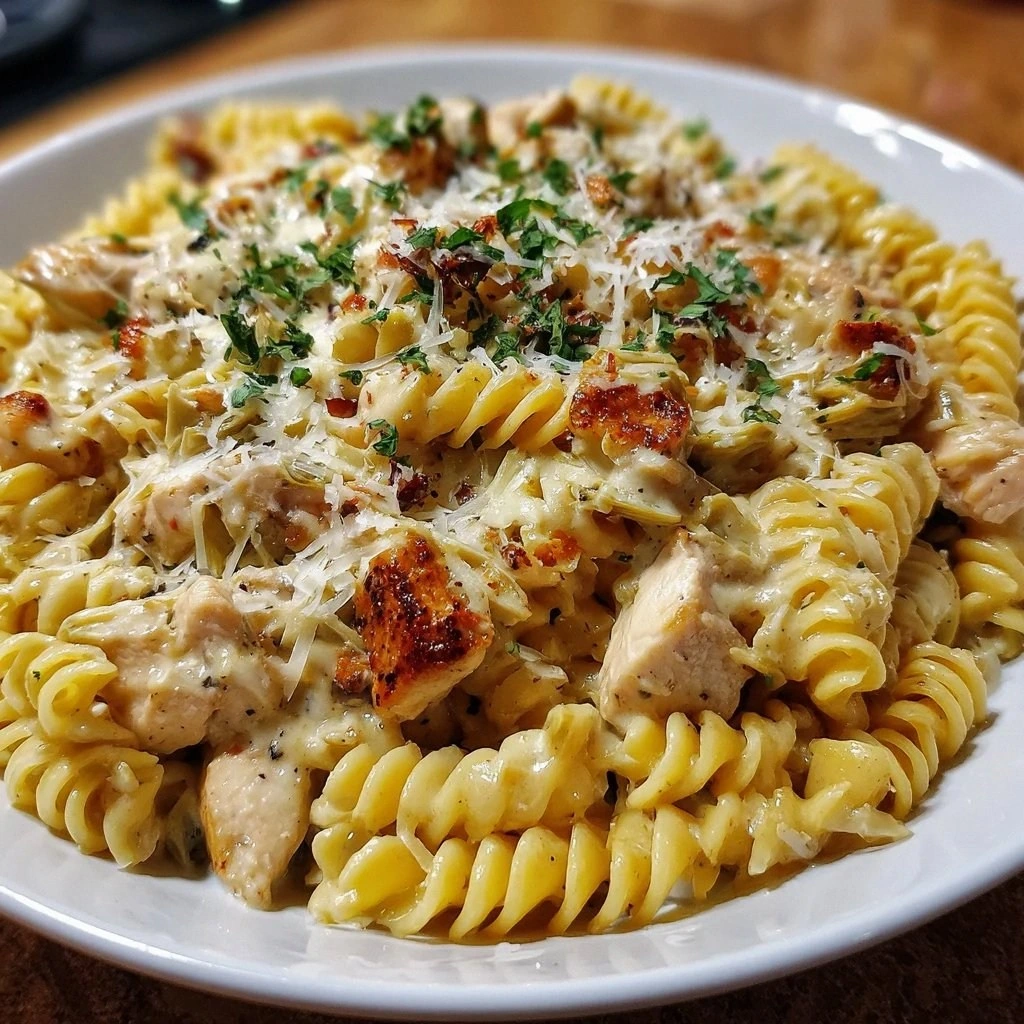
Picture this: fork-twirls of pasta that carry sauce the way silk carries perfume, chicken cubes so juicy they bounce when you spear them, and artichoke hearts that taste like they summered on a Greek island. The sauce is a lazy river of cream, garlic, and aged Parmesan that refuses to separate no matter how long you linger over seconds. Most creamy pastas feel like a gut-bomb within twenty minutes; this one finishes light because we treat the cream like a guest, not a landlord. I dare you to taste this and not go back for thirds while pretending you're "just checking if it needs salt."
If you've ever struggled with gloppy, flour-thickened Alfredo imposters, you're not alone—and I've got the fix. No roux, no cream cheese, no cornstarch slurry that turns leftovers into a rubber brick. Instead we use the pasta's own starch, a whisper of lemon, and the correct temperature curve to keep everything fluid and glossy. Future pacing moment: imagine yourself plating this in a wide, shallow bowl, showering it with fresh parsley, hearing someone in the next room gasp when they catch that first garlicky waft. Stay with me here—this is worth it.
Let me walk you through every single step—by the end, you'll wonder how you ever made it any other way.
What Makes This Version Stand Out
- Velvet-Smart Sauce: Instead of a floury paste, we ride the emulsion wave—pasta water, fat, and cheese unite into a clingy gloss that refuses to break. The result slides across your tongue like melted gelato yet still feels airy enough for a weeknight.
- Two-Stage Sear Magic: Chicken gets a blazing-hot hard sear for color, then finishes gently in the sauce so every cube stays plump. Crispy edges that shatter like thin ice, centers that drip savory juice—no dry cardboard cubes here.
- Artichoke Timing Trick: Most recipes toss them in early, turning these tender gems into gray mush. We fold them in off-heat so they stay rosy and tangy, little bursts of sunshine that surprise your palate between creamy bites.
- One-Pan Bragging Rights: Pasta cooks while the sauce builds; everything marries in the same skillet. Fewer dishes equals more couch time, and your future self doing the happy dance with a glass of wine.
- Leftover Glow-Up: This reheats like a dream—add a splash of water, gentle heat, and it's indistinguishable from fresh. Meal-preppers have reported hiding Tupperware in office refrigerators with handwritten threats taped to the lids.
- Guest-Impressing Speed: From fridge raid to plated elegance in 35 minutes flat. That sizzle when the garlic hits the pan? Absolute perfection, and the soundtrack to your new dinner party flex.
Alright, let's break down exactly what goes into this masterpiece...
Inside the Ingredient List
The Flavor Base
Fusilli is the MVP here, those tight corkscrews grabbing every droplet of sauce like they're hoarding treasure. Sure, you could sub penne or fettuccine, but you'll lose the built-in sauce pockets that make each bite self-saucing. When the pasta boils, its surface starch leaches into the water; later we ladle that cloudy elixir into the skillet and watch the sauce tighten into silk. Skip the imported bronze-cut stuff if you must, but accept that the sauce won't cling quite as fiercely. If you're gluten-free, a good chickpea fusilli holds up without turning gummy—just shave thirty seconds off the boil time.
Garlic is the aromatic backbone, and fresh is non-negotiable. Pre-minced jars taste like hospital corridors—mild, metallic, sad. Smash the cloves beneath your knife blade, slice paper-thin, and let it sizzle just until the edges turn golden. Too pale and the sauce lacks bass notes; too brown and you get acrid top notes that no amount of cream can hide. Confession: I'll be honest—I ate half the batch of garlic straight from the pan like popcorn while the chicken seared.
The Texture Crew
Chicken breast gets a bad rap because most cooks treat it like indestructible rubber. Dice it into three-quarter-inch cubes—small enough to cook fast, large enough to stay juicy. Toss the cubes with a whisper of baking powder before seasoning; the alkaline boost accelerates Maillard browning, giving you café-level crust in half the time. Once seared, they rest on a warm plate while the sauce builds, then tumble back in to soak up flavor without drying out. If thighs are more your vibe, use them, but trim the excess fat or your sauce will separate like a bad hollandaise.
Heavy cream is the luscious canvas, but temperature discipline keeps it from breaking. Let it come to room temp while the pasta boils; cold cream hit with high heat will curdle faster than you can curse. The fat content matters—anything below 36 percent will weep water and leave you with a grainy puddle. For a lighter version, you can swap in half-and-half, but reduce the pasta water by a third so the emulsion stays tight.
The Unexpected Star
Artichoke hearts are the curveball that makes people ask, "Wait, what is that amazing tang?" I buy them packed in water, not oil, so I can control the salinity and fat ratio. Quarter them so they nestle inside the fusilli's spirals like hidden jewels. If you only have the marinated kind, give them a quick rinse to mute the vinegar, then pat dry so they don't waterlog the sauce. Add them off-heat; they simply need to warm through, not cook. Skip them and the dish still works, but you lose the Mediterranean vacation vibe that makes everyone lean back and sigh.
The Final Flourish
Parmesan needs to be the real deal—aged 24 months minimum, nutty and crystalline, not the powdered stuff in a green can. Grate it finely so it dissolves instantly, and save a small handful for tableside snow showers. The rind goes into my freezer for future soups, but that's a different love letter. If you're dairy-free, nutritional yeast plus a squeeze of lemon gives a surprisingly similar umami kick, though you'll lose some silkiness. And please, never buy pre-grated; the anti-caking cellulose turns your sauce gritty like beach sand.
Everything's prepped? Good. Let's get into the real action...
The Method — Step by Step
- Start a large pot of water boiling—think oceanic salt levels; the pasta needs to taste like the sea. While it heats, pat the chicken cubes bone-dry with paper towels; moisture is the enemy of that golden crust we're chasing. Season aggressively with kosher salt, cracked pepper, and a pinch of smoked paprika for subtle campfire vibes. Swirl a stainless or cast-iron skillet over medium-high heat until a drop of water skitters like mercury; add just enough oil to shimmer, then lay the chicken down in a single, bossy layer. The sizzle should sound like applause—if it doesn't, wait longer next time.
- Don't touch the chicken for a full three minutes; let the Maillard gods do their caramel magic. When the edges turn opaque halfway up, flip each cube with tongs—yes, individually, because shortcuts lead to gray meat. Another two minutes on the second side and they should be bronzed like beach volleyball champs. Transfer to a warm plate, tent loosely, and prepare for your kitchen to smell like a Parisian bistro at dusk.
- Drop the fusilli into the now-rolling water and set a timer for two minutes less than package directions; we'll finish it in the sauce so it drinks up flavor. Reduce the burner under the skillet to medium and add a knob of butter plus the sliced garlic. Swirl continuously—this next part is pure magic. You want the garlic to dance and sing but not tan; the moment it turns fragrant like fresh-baked bread, pour in the room-temperature cream.
Insider Tricks for Flawless Results
The Temperature Rule Nobody Follows
Most home cooks blast the burner and wonder why the cream separates into an oily mess. The sweet spot is just below a simmer—look for gentle steam wisps, not frantic bubbles. If you're nervous, keep a fingertip sized knob of cold butter handy; dropping it in will cool the sauce instantly and buy you time to whisk salvation. I prop a thermometer in the skillet until I learned to recognize the visual cues; 180°F is your magic ceiling. Ignore this and you'll be serving chicken-flavored cottage cheese—edible, but nobody will beg for the recipe.
Why Your Nose Knows Best
Garlic goes from sweet to acrid faster than a pop song chorus, and your nose is the first alarm. When the scent changes from raw and sharp to warm and bakery-like, you're thirty seconds from bitter. Stand there, wooden spoon in hand, and don't multitask. A friend tried skipping this step once—let's just say it didn't end well, and her date still jokes about "eau de burnt garlic" every Thanksgiving.
The 5-Minute Rest That Changes Everything
Once plated, let the bowls sit for five minutes. I know, hot pasta beckons like a siren, but the sauce thickens gently as it cools, clinging even tighter to the spirals. Cover with an inverted plate so it stays warm; during this pause the flavors mingle like introverts at a party—awkward at first, then best friends forever. Your patience pays off in restaurant-level cohesion instead of soupy separation.
Creative Twists and Variations
This recipe is a playground. Here are some of my favorite ways to switch things up:
Smoky Bacon & Spinach Remix
Render three strips of thick-cut bacon until crisp; remove and crumble. Swap half the chicken for the bacon fat, then wilt in two handfuls of baby spinach at the very end. The smoky pork plays beautifully with the tangy artichokes, and the greens make you feel virtuous while eating cream.
Spicy Calabrian Chili Version
Finely mince two Calabrian chilies packed in oil and add them with the garlic. The fruity heat blooms in the cream, giving gentle fire that builds rather than burns. Finish with lemon zest instead of juice for a brighter top note.
Seafood Swap
Skip the chicken and sear scallops or shrimp instead; seafood cooks faster, so pull them at just-opaque to avoid rubber. A splash of white wine deglazing the pan adds coastal swagger that makes you dream of seaside trattorias.
Spring Green Edition
Toss in blanched asparagus tips and fresh peas during the final fold. The vegetables retain snap and color, turning the dish into a celebration of spring. Use half-and-half instead of heavy cream to keep things meadow-light.
Mushroom Umami Bomb
Add sliced creminis after the chicken exits; let them brown deeply before the garlic stage. Their earthy depth marries with artichoke tang like old friends reuniting. A whisper of fresh thyme seals the woodland vibe.
Dairy-Free Coconut Spin
Substitute full-fat coconut milk for the cream and use nutritional yeast plus white miso for cheesy funk. It sounds hippie, but the coconut's natural fat emulsifies just like dairy, and the artichokes keep the tropical note in check.
Storing and Bringing It Back to Life
Fridge Storage
Transfer cooled leftovers to an airtight glass container; plastic will absorb garlic perfume and haunt tomorrow's yogurt. It keeps beautifully for up to four days, though the artichokes will mellow. Press plastic wrap directly onto the surface to prevent a skin from forming, like tucking your pasta into a snug bed.
Freezer Friendly
Cream-based sauces can be finicky in the deep freeze, but this one survives if you undercook the pasta by a full three minutes first. Freeze in single-serve silicone bags, squeeze out every molecule of air, and label with smug satisfaction. Thaw overnight in the fridge, then reheat gently with a splash of half-and-half to re-emulsify.
Best Reheating Method
Skip the microwave unless you enjoy grainy sadness. Instead, warm a nonstick skillet over low, add the pasta plus two tablespoons of water, and cover for three minutes. The steam loosens the sauce; a gentle toss brings back the glossy glory. Add a tiny splash of water before reheating—it steams back to perfection and fools everyone into thinking you made it fresh.