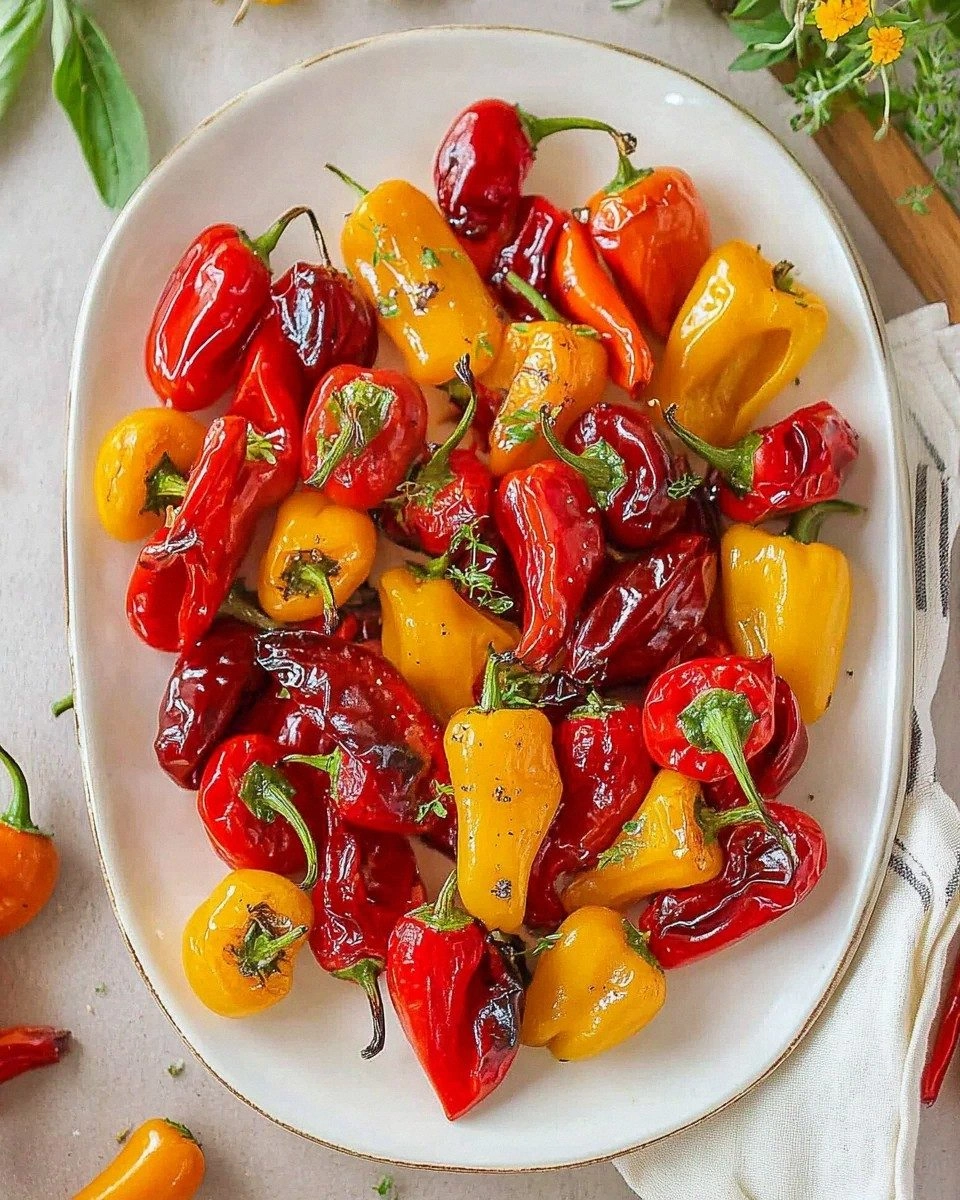
Last Tuesday I was supposed to be making a sensible sheet-pan dinner—chicken thighs, potatoes, maybe a sprig of rosemary for virtue-signaling—but the grocery gods had other plans. They’d parked a glowing hill of mini sweet peppers right by the checkout, each one no bigger than a toddler’s thumb, their skins lacquered red, orange, and yellow like a bowl of candy that somehow counts as produce. One innocent bag landed in my cart, then a second, and by the time I got home I’d already eaten three raw ones standing over the sink, crunching through the thin walls the way other people demolish potato chips. Fast-forward twenty minutes: the chicken was still sitting on the counter, ignored, while I blasted those peppers under the broiler with nothing but olive oil, salt, and the nagging suspicion that I might be about to ruin dinner. Spoiler: I didn’t. What emerged was a blistered, smoky-sweet tangle that tasted like summer vacation in Napoli even though my kitchen window overlooks a snow-dusted fire escape in February. I ate the entire tray standing up, using my fingers like chopsticks, completely unable to stop. When my roommate walked in, she took one look at the greasy baking sheet and said, “You’re making this again tomorrow, right?” Reader, I’ve made it every single day since. Let me walk you through every single step—by the end, you’ll wonder how you ever made it any other way.
Picture this: it’s 6:47 p.m., the light outside is doing that golden-hour thing that makes even frozen pizza look poetic, and your oven is preheating like a dragon clearing its throat. You slice the peppers lengthwise, the knife slipping through with almost zero resistance, seeds popping out like tiny confetti. A shimmer of olive oil lands in the bowl, followed by salt that dissolves on contact, and then—here’s the kicker—a whisper of smoked paprika that clings to every curve like bronzer on vacation skin. The scent hits you first: grassy, bright, almost citrusy. Then the peppers hit the hot pan and that sizzle? Absolute perfection. Ten minutes later the edges blister into delicate black lace, the flesh slumps into silk, and the kitchen smells like someone bottled sunshine and set it on fire. I dare you to taste this and not go back for seconds; I double-dog-dare you to wait for the rest of your dinner to catch up.
Most recipes treat mini peppers like garnish—throw them on a tray, hope for the best, accept that half will be flabby and the other half carbonized. That approach drives me bananas. The secret is a two-temperature blast: start hot to char, finish medium to steam in their own juices. The result is a pepper that collapses under the weight of a fork but still has a whisper of snap, smoky outside, candy-sweet inside. If you’ve ever struggled with soggy roasted veg, you’re not alone—and I’ve got the fix. We’re also going to talk about why a single sheet of parchment can save you from scrubbing until midnight, how to avoid the dreaded pepper steam-burn (trust me, it’s a thing), and why a squeeze of lemon at the end is non-negotiable. Okay, ready for the game-changer?
Before we dive in, full disclosure: I ate half the batch before anyone else got to try it. I told myself I was “testing for seasoning,” but really I was powerless against the aroma fogging up my glasses. This recipe is that good. It’s also weeknight-easy, potluck-impressive, and somehow gluten-free, dairy-free, vegan, low-carb, and still tastes like junk-food nirvana. Future you is already pulling these out of the oven, the whole kitchen smelling incredible, while your neighbor sniffs suspiciously from the hallway wondering what restaurant just opened in your apartment. Let’s make it official.
What Makes This Version Stand Out
- Char-Then-Caramelize: We crank the oven to 475 °F for the first six minutes—this sears the skins so they blister like tiny churros—then drop to 400 °F to let natural sugars ooze out and candy the flesh. Other recipes keep one temperature and end up with either raw crunch or sad papery shells. Don’t settle.
- Two-Oil Trick: A drizzle of everyday olive oil gets massaged in first; a final whisper of fancy extra-virgin lands after roasting so the pepper pores drink in fresh, grassy notes instead of cooking them off. It’s like perfume versus potpourri—timing matters.
- Micro-Steam Pocket: After roasting, we tent the tray with foil for exactly three minutes. The residual heat creates a sauna that loosens the skins just enough for silkiness, but keeps the snap. Most chefs skip this and serve wrinkly, jerky-like peppers. Rookie mistake.
- Smoked Salt Finish: Plain kosher salt during cooking, yes—but a final pinch of smoked Maldon crystals right before serving amps up the campfire vibe without tasting like you dropped the peppers in an ashtray. Your guests won’t identify the source; they’ll just hover around the platter like seagulls.
- Color-Conscious Cutting: We leave tiny stems attached for reds and oranges (they become edible handles) but trim yellows completely—yellows cook fastest and turn to mush if you so much as blink. This level of nerdery separates mediocrity from medal-worthy.
- Make-Ahead Magic: Roast earlier in the day, keep them on the counter uncovered; the skins dry just a touch, concentrating flavor. Reheat at 325 °F for five minutes and they taste oven-fresh. Try that with most roasted vegetables and you’ll get limp socks.
- Pantry Alchemy: One clove of grated garlic, half teaspoon of honey, and a squeeze of lemon whisked into the post-roast oil creates a lightning-fast dressing that glazes the peppers like a mirror. Suddenly you’ve got hot veg and bright sauce in under a minute.
Alright, let’s break down exactly what goes into this masterpiece...
Inside the Ingredient List
The Flavor Base
Mini sweet peppers are the starlets here—each one a bite-size firework of sugar. Look for firm skins, no bruises, and stems that still look freshly cut, not dried nubbins. A one-pound bag feeds four generous side portions, but I routinely double it because, confession, I plan for “chef tax.” If all you can find are the standard bell peppers, you can still play along; just slice them into ½-inch strips and shave two minutes off the high-heat phase. The smaller peppers, though, have a higher skin-to-flesh ratio, which means more blister and more concentrated flavor—think of them as espresso shots versus diner coffee.
The Texture Crew
Olive oil is the silk robe that lets everything slide around the pan without scorching. Use a mid-range oil for roasting; save the estate-bottle stuff for finishing. Salt is non-negotiable—kosher flakes cling and dissolve evenly. Skip iodized table salt unless you enjoy the faint metallic after-party. Freshly ground black pepper adds a back-of-throat warmth, but go easy; we’re spotlighting sweetness, not building a spice fortress.
The Unexpected Star
Smoked paprika is the sneaky bassist in this band: you only notice when it’s gone. Half a teaspoon blooms in the oven, threading every pepper with backyard-barbecue aroma. If you’re out, you could sub sweet paprika plus a pinch of ground chipotle, but you’ll lose the velvet depth. On the sweet side, a teaspoon of honey balances the paprika’s edge and encourages caramelization; maple syrup works too, but honey’s hygroscopic wizardry means glossier, stickier edges.
The Final Flourish
Acid wakes up the sugars like a splash of cold water on a sleepy face. I’m partial to Meyer lemon for its orange-blossom perfume, but regular lemon, lime, even a quick zip of sherry vinegar all sing. Finish with fresh herbs that play nicely with smoke—parsley for brightness, oregano for Mediterranean swagger, or thyme for piney perfume. Chop them fine so they dust the peppers like confetti rather than toppling off in big, floppy leaves.
Everything’s prepped? Good. Let’s get into the real action...

The Method — Step by Step
- Crank your oven to 475 °F (245 °C) with a rack in the upper-middle slot. While it heats, slice each pepper lengthwise, leaving stems on reds/oranges for cute handles, trimming yellows completely. Use a paring knife and angle the tip away from your fingers—those little guys roll. Scoop out seeds with the tip of your thumb; they pop out in one satisfying flick. You want the halves as dry as possible so oil clings later.
- Dump the peppers into a roomy metal bowl—avoid plastic, which cools quickly and makes oil seize. Drizzle with 2 tablespoons olive oil, then sprinkle ¾ teaspoon kosher salt, ¼ teaspoon black pepper, and ½ teaspoon smoked paprika. Now channel your inner spa masseuse: rub the oil and spices into every curve for a solid 45 seconds. The bowl should feel barely warm and the peppers should glisten like they’ve just applied highlighter.
- Line a rimmed baking sheet with parchment. No parchment? Lightly oil the pan, but expect a little scrubbing later. Arrange peppers cut-side down; this maximizes surface contact for blistering. Crowding is fine—they shrink—but if you’re doubling, use two sheets so steam can escape instead of stewing your beauties.
- Slide the tray onto that upper rack and roast for 6 minutes exactly. Set a timer; this isn’t the moment to answer a text. You’ll hear gentle crackling as skins separate and sugars hit the hot metal. If you peek and see pale peppers, close the door and trust the process; the color comes in waves.
- Without opening the oven, drop temperature to 400 °F (205 °C) and roast another 10–12 minutes. Rotate the pan halfway if your oven has hot spots. Edges will bronze, and the flesh will slump inward like tiny hammocks. That’s your cue for doneness.
- While the peppers finish, whisk together 1 tablespoon extra-virgin olive oil, 1 teaspoon honey, and the zest of half a lemon in a small bowl. This micro-dressing will gloss the peppers without drowning their natural sweetness.
- Remove tray, immediately drizzle the honey-lemon oil, then squeeze the juice of half the lemon all over. Use a silicone spatula to tumble everything while still sizzling; the dressing will reduce and cling. Work fast—steam is flavor escaping.
- Now the secret move: loosely tent the tray with foil for 3 minutes. The trapped heat finishes cooking the thickest walls and loosens skins just enough for silk. Do not exceed 3 minutes or you’ll drift into mush territory. Transfer to a serving platter, shower with chopped parsley, and serve hot or room temp. Stand back and watch them disappear faster than free Wi-Fi.
That’s it—you did it. But hold on, I’ve got a few more tricks that’ll take this to another level...
Insider Tricks for Flawless Results
The Temperature Rule Nobody Follows
Most home ovens lie by 25 degrees. Invest in an inexpensive oven thermometer and hang it near the peppers; you’ll be shocked how often “475 °F” is actually 435 °F. Adjust accordingly or your peppers will tan instead of blister. I learned this the hard way when a batch emerged looking sun-kissed instead of beach-bronzed, and no amount of extra time will fix under-char.
Why Your Nose Knows Best
When the peppers are 90 % done, the room will fill with a scent that’s equal parts popcorn and caramelized onion. That’s your Pavlovian cue to set down the phone and hover near the oven. Miss that window and the sugars tip from amber to bitter. A friend tried skipping this step once—let’s just say it didn’t end well, and her cat still won’t come into the kitchen.
The 5-Minute Rest That Changes Everything
After the foil tents come off, let the peppers sit uncovered for five minutes. The surface moisture evaporates, concentrating flavor and letting skins tighten back into a glossy sheath. Serve immediately and they’ll taste great; wait those extra minutes and they’ll taste like someone whispered secrets of umami into each one.
Creative Twists and Variations
This recipe is a playground. Here are some of my favorite ways to switch things up:
Feta & Oregano Bomb
Crumbled feta scattered over the hot peppers melts into creamy pockets, while a final dusting of dried oregano gives a Greek-island vibe. Finish with a splash of red-wine vinegar for cheek-sucking brightness.
Asian-Inspired Sesame Glaze
Swap smoked paprika for a teaspoon of gochujang and finish with toasted sesame oil, scallion threads, and a snowstorm of sesame seeds. Sweet-heat umami in under a minute.
Balsamic Reduction Swirl
Skip the honey and instead drizzle bottled balsamic reduction after roasting. The syrupy tang plays candy-shop tag with the peppers’ natural sugars. Kids inhale these like candy.
Chimichurri Shower
Blitz parsley, cilantro, garlic, red-pepper flakes, and red-wine vinegar into a loose sauce, then spoon it over the warm peppers. South-American steakhouse vibes, zero grill required.
Breakfast Burrito Stuffing
Chop the roasted peppers and fold into scrambled eggs with pepper-jack cheese. The smoky edges give breakfast burritos a campfire soul that makes drive-thru versions taste like cardboard.
Antipasto Skewer Upgrade
Thread cooled peppers onto toothpicks with bocconcini and a fold of prosciutto. Instant party canapé that looks fussy but takes ten minutes if you roast ahead.
Storing and Bringing It Back to Life
Fridge Storage
Layer completely cooled peppers in an airtight container between sheets of parchment to prevent sticking. They’ll keep four days, but good luck making them last past breakfast. If they seem limp, a quick kiss under the broiler for two minutes revives the skins.
Freezer Friendly
Spread peppers in a single layer on a sheet, freeze until rock solid, then tumble into a zip bag. They’ll keep three months. Thaw overnight in the fridge, then reheat at 350 °F for eight minutes. Texture softens slightly, but flavor intensifies—excellent for blending into soups or sauces.
Best Reheating Method
Skip the microwave unless you enjoy rubber. Instead, warm a dry cast-iron skillet over medium heat, add peppers, and cover for three minutes. The gentle steam re-plumps while the direct heat re-cracks the edges. Add a tiny splash of water before covering—it steams back to perfection.